Email
ceejackteam@compass.com
Call
(516) 457-7111
New York's first English settlement, founded in 1640, and still the largest village in the Hamptons.
Southampton Village is an incorporated village of roughly 4,550 residents on the South Fork, and it is the oldest English settlement in New York State. A group of English Puritans sailed from Lynn, Massachusetts and landed at Conscience Point on June 12, 1640, established a plantation at the head of Old Town Pond, and named the place after the Earl of Southampton. The Shinnecock Nation, whose reservation adjoins the village to the west, welcomed those settlers and taught them to farm the land. The village incorporated in 1894, serves as the seat of the Town of Southampton, and is the largest of the communities that make up the summer colony known as the Hamptons. Buyers looking at Southampton Village homes for sale are buying into a municipality with its own mayor and board, its own police department, its own zoning, and its own beach permit system, on top of town and county government.
The market moved harder here than anywhere else on the East End last year. Recorded sales data for 2025 put the Southampton Village median sale price at $4,337,500, up 29.5 percent from $3,350,000 the year before, which was the largest median increase of any of the twelve markets the brokerage tracks. The village recorded 100 sales worth $676 million, a 63 percent jump in dollar volume, with five trades above $20 million. For contrast, the wider Southampton area including North Sea came in at $1,875,000 on 177 sales, which tells you how much of the value sits inside the village line. The June 2026 U.S. Open at Shinnecock Hills, just west of the village, put the market in front of a global audience for a week and the sixth time the championship has been played there.
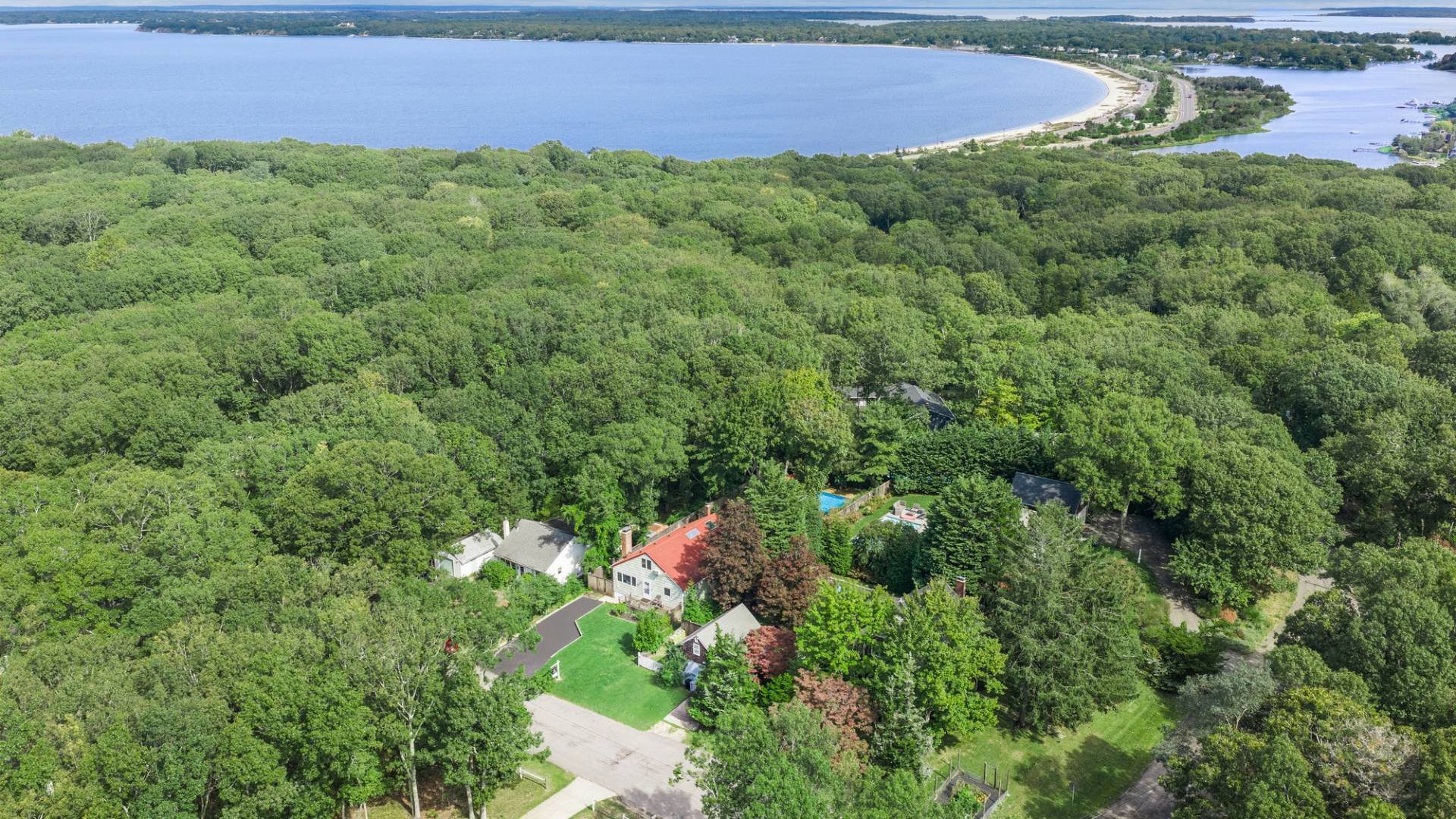
What that money is buying is the deepest estate inventory in the Hamptons and a village that works around it. The estate section south of the village center, along Gin Lane, First Neck Lane, Ox Pasture Road, Halsey Neck Lane, and Great Plains Road, holds turn-of-the-century summer cottages on multiple acres behind mature hedges, and Meadow Lane runs west from it along a barrier beach with ocean on one side and Shinnecock Bay on the other. Behind all of it sits practical infrastructure the rest of the East End does not have: a hospital, a Long Island Rail Road station inside the village, a full commercial Main Street and Jobs Lane, and Cooper's Beach, which has been ranked the top beach in the United States. Five village beaches run on a village permit.
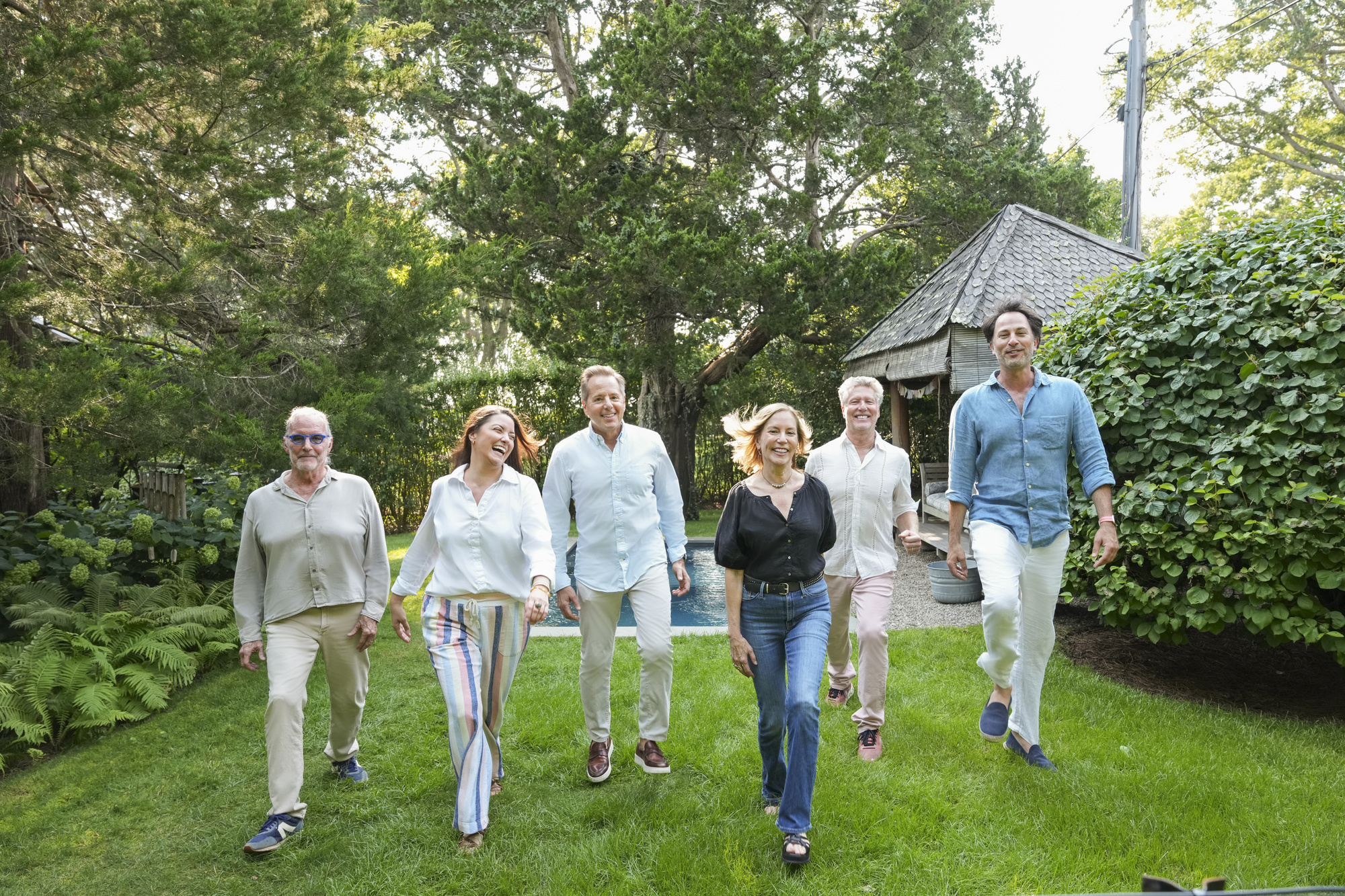
Choosing an agent in an estate market is mostly about access to what is not advertised. The CeeJackTeam has worked the East End since 2006, from Westhampton to Montauk. Cee Scott Brown and Jack Pearson, with Partner Agent Denise Wilder, bring over 60 years of combined experience and over $1.5 billion in sales volume, and have been named Top Producer 13 years in a row, with a place on the Top Producer Presidents Council for 10 of those years. Since joining Compass in 2020 the team has closed 425+ deals. Cee spent two decades in the New York art world and Jack built a senior career in luxury fashion retail, backgrounds that read well in a village where a listing may be a landmarked shingle cottage or a modern oceanfront rebuild. The office is at 84 Main Street in Sag Harbor, about twenty minutes east. Responsive, respectful, real.
Cooper's Beach, at the foot of Cooper's Neck Lane, has been ranked the top beach in the United States in the annual Dr. Beach list, and it is a walk of a few minutes from Main Street. The village also runs Old Town Beach, Halsey Neck Beach, Fowler Beach, and Dune Beach on Meadow Lane. All five require a village beach permit, and Cooper's is the only one selling daily passes, bought in person at the booth.
Cooper's Beach and Four More.
Cooper's Beach, at the foot of Cooper's Neck Lane, has been ranked the top beach in the United States in the annual Dr. Beach list, and it is a walk of a few minutes from Main Street. The village also runs Old Town Beach, Halsey Neck Beach, Fowler Beach, and Dune Beach on Meadow Lane. All five require a village beach permit, and Cooper's is the only one selling daily passes, bought in person at the booth.
The estate section running south of the village center, along Gin Lane, First Neck Lane, Ox Pasture Road, Halsey Neck Lane, Captain's Neck Lane, and Great Plains Road, is the largest concentration of turn-of-the-century summer estates on the East End, most on one to five acres behind mature hedges. Meadow Lane extends west along the barrier beach with the Atlantic on one side and Shinnecock Bay on the other.
The Deepest Estate Inventory in the Hamptons.
The estate section running south of the village center, along Gin Lane, First Neck Lane, Ox Pasture Road, Halsey Neck Lane, Captain's Neck Lane, and Great Plains Road, is the largest concentration of turn-of-the-century summer estates on the East End, most on one to five acres behind mature hedges. Meadow Lane extends west along the barrier beach with the Atlantic on one side and Shinnecock Bay on the other.
Main Street and Jobs Lane form the largest walkable retail core in the Hamptons, with national brands alongside long-standing independents, galleries, restaurants, and a full-service gourmet market. Unlike most of the East End, the village supports everyday errands as well as summer shopping, and Cooper's Beach is a seven-minute walk from the top of Main Street.
A Real Commercial Main Street.
Main Street and Jobs Lane form the largest walkable retail core in the Hamptons, with national brands alongside long-standing independents, galleries, restaurants, and a full-service gourmet market. Unlike most of the East End, the village supports everyday errands as well as summer shopping, and Cooper's Beach is a seven-minute walk from the top of Main Street.
Southampton has the South Fork's hospital, Stony Brook Southampton Hospital, inside the village, along with a Long Island Rail Road station on the Montauk Branch within walking distance of Main Street and its own village police department. For year-round living, and for anyone weighing what happens in an emergency in February, this is a material difference from the hamlets further east.
Infrastructure the Rest of the East End Lacks.
Southampton has the South Fork's hospital, Stony Brook Southampton Hospital, inside the village, along with a Long Island Rail Road station on the Montauk Branch within walking distance of Main Street and its own village police department. For year-round living, and for anyone weighing what happens in an emergency in February, this is a material difference from the hamlets further east.
This is New York State's oldest English settlement, and the evidence is still on the ground. The Halsey House on South Main Street dates to the seventeenth century and is among the oldest English frame houses in the state, the North Main Street Historic District preserves the early village fabric, and Conscience Point, where the settlers landed in 1640, is a short drive northwest. The Southampton History Museum interprets it all.
Standing History From 1640 Forward.
This is New York State's oldest English settlement, and the evidence is still on the ground. The Halsey House on South Main Street dates to the seventeenth century and is among the oldest English frame houses in the state, the North Main Street Historic District preserves the early village fabric, and Conscience Point, where the settlers landed in 1640, is a short drive northwest. The Southampton History Museum interprets it all.
The area immediately around the village holds a remarkable density of historic golf. Shinnecock Hills Golf Club, founded in 1891 and the first American club to admit women members, hosted the U.S. Open in June 2026 for the sixth time, and the National Golf Links of America adjoins it. The Meadow Club sits inside the estate section. All are private, and are noted here as geography rather than as amenities.
Golf and Clubs at the Highest Level.
The area immediately around the village holds a remarkable density of historic golf. Shinnecock Hills Golf Club, founded in 1891 and the first American club to admit women members, hosted the U.S. Open in June 2026 for the sixth time, and the National Golf Links of America adjoins it. The Meadow Club sits inside the estate section. All are private, and are noted here as geography rather than as amenities.

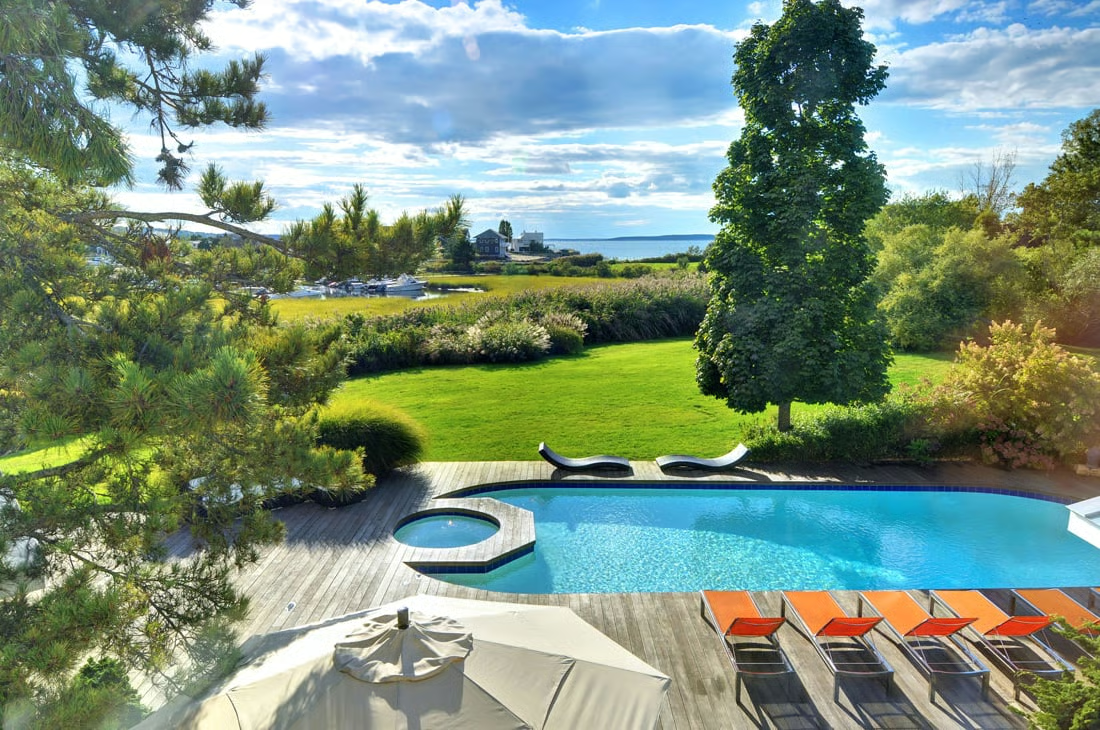
Meadow Lane is the top of this market and one of the most valuable stretches of residential coast in the country. It runs west from the estate section along a narrow barrier beach, with the Atlantic on the south side and Shinnecock Bay on the north, which means many properties hold ocean and bay frontage at once and several have dock potential on the bay side. Houses run from mid-century beach houses to very large contemporary rebuilds, generally on one to several acres, and the road ends near the Shinnecock Inlet. Public records show the scale: a pair of adjoining estate-section and oceanfront parcels at 2 Meadow Lane and 2 Gin Lane traded together for $40 million, and 366 and 376 Gin Lane sold at auction for $90 million in 2024. Meaningful oceanfront here generally begins in the $20 million range and much of it trades privately. Note also that in January 2026 the Town agreed to acquire 1950 Meadow Lane for about $25.8 million to create a new public ocean beach, which will change access patterns on the western end of the road.

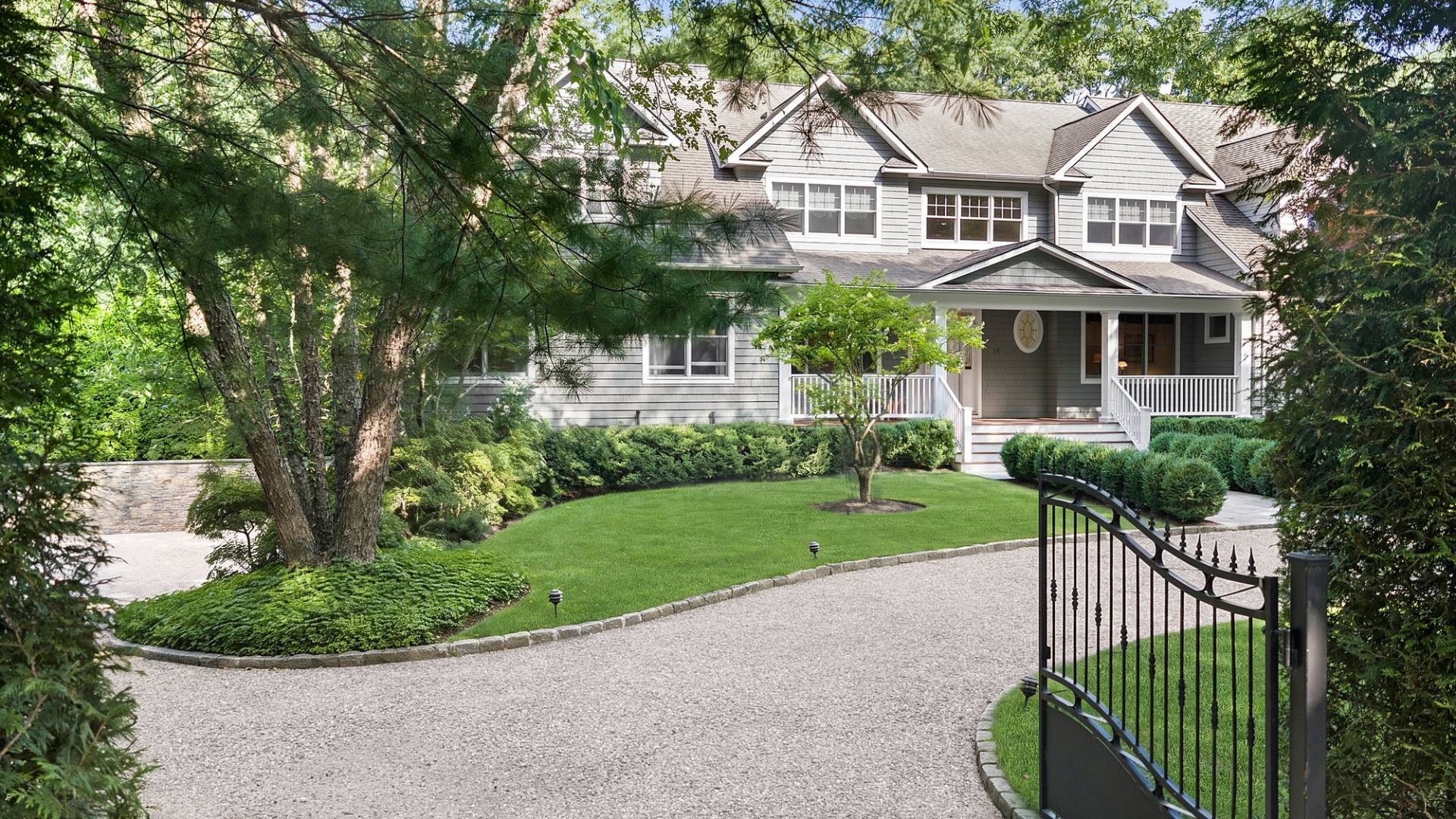
The estate section is the band between the village center and the ocean, and it is the reason Southampton has the deepest luxury inventory in the Hamptons. Gin Lane, First Neck Lane, Ox Pasture Road, Halsey Neck Lane, Captain's Neck Lane, Great Plains Road, and Coopers Neck Lane hold shingle-style and Colonial Revival summer cottages built from the 1890s onward, many designed by named architects, on one to five acres behind hedges that were planted a century ago. Several have been subdivided from much larger original estates, which is worth understanding when you compare lot sizes. Tennis courts, pool houses, and staff wings are common. The Meadow Club sits within the section and Cooper's Beach is at its southern edge. Recent activity has commonly run from about $8 million to $30 million, with oceanfront and the largest parcels well above that.
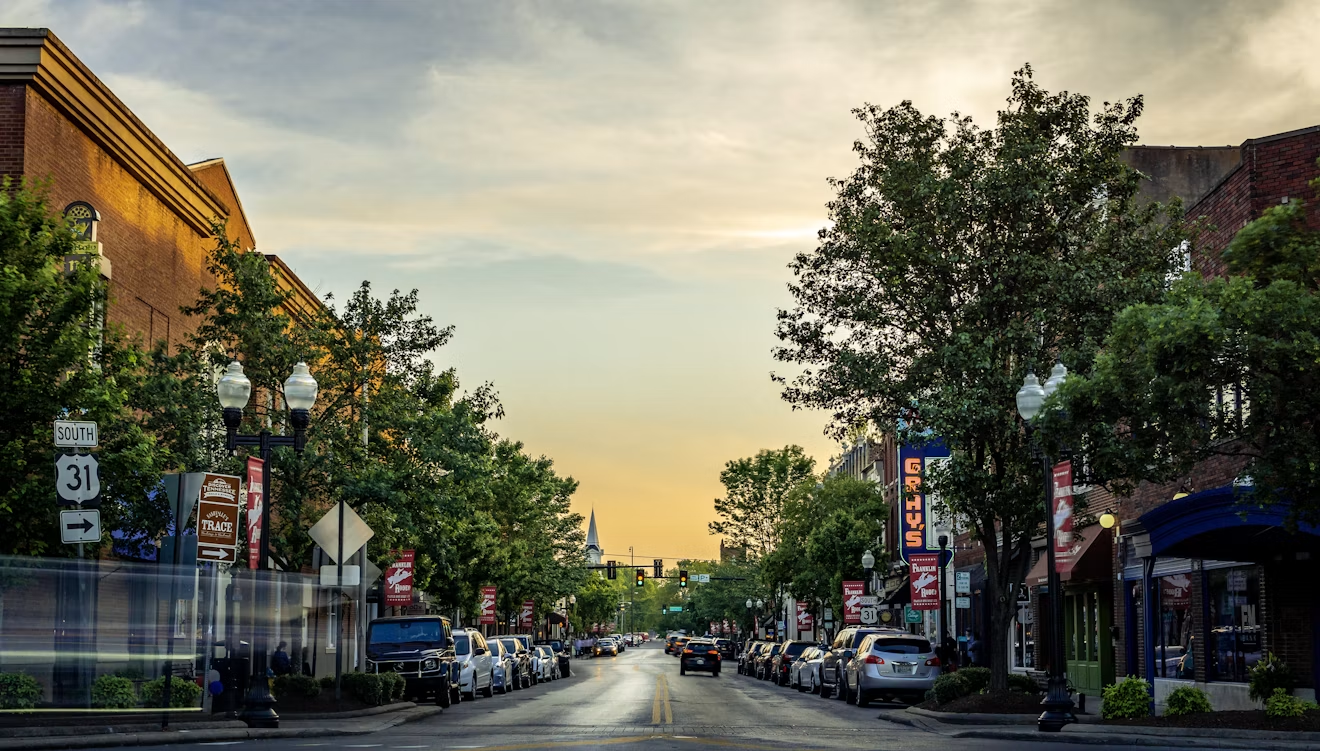
The village core is the walkable heart of Southampton and the most practical place in the village to live year-round. Around Main Street, Jobs Lane, Windmill Lane, Pond Lane, and the streets off them you will find nineteenth-century village houses, shingle-style homes, converted commercial buildings, and cottages on lots typically under an acre. What you get is the ability to leave the car: the shops, restaurants, the library, the arts center, the hospital, and the train station are all on foot, and Cooper's Beach is a short walk or bike from much of it. What you accept is summer foot traffic and less privacy than the estate lanes. Recent activity has commonly run from about $2.5 million to $6 million, with larger historic village houses higher.

Olde Towne, east of the village center toward the ocean, takes its name from the original 1640 settlement area and is now one of the village's strongest addresses. The area around Old Town Road, Old Town Pond, and the lanes toward Southampton Beach and Little Plains holds a mix of restored historic houses, mid-century properties, and substantial recent construction, some of it on parcels large enough to read as estate scale. Old Town Beach is at the southern end and is a village permit beach. Custom-built estates here have traded in the mid to high thirty millions. Recent activity has commonly run from about $5 million to $20 million depending on lot size and distance to the ocean, with new construction at the upper end.
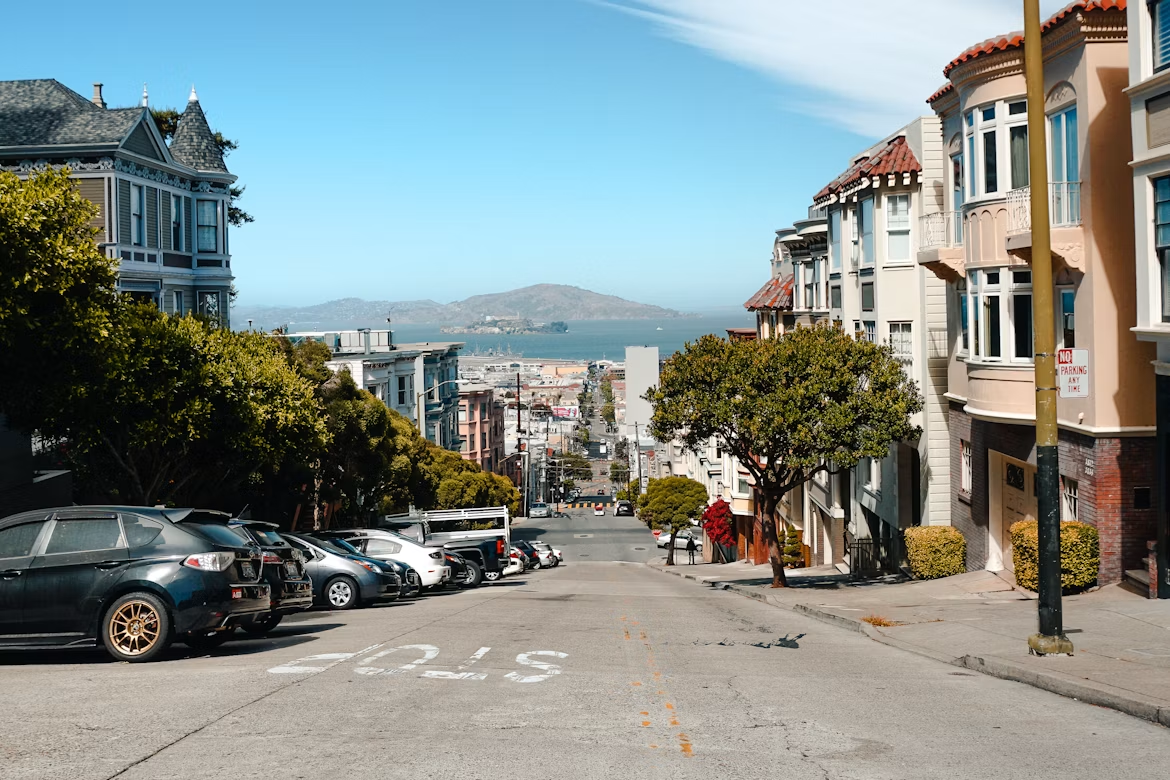
North of Hill Street and around the northern and eastern edges of the village, the housing gets smaller, more varied, and considerably more attainable, which makes this the entry point to a village address. Around North Main Street, the streets near the school campus on Narrow Lane, and the roads toward the village boundary you will find capes, ranches, older village houses, and renovated cottages on lots often under half an acre. The North Main Street Historic District is here, which means some exterior work goes through review. Some streets on the fringe sit just outside the village line, which changes the tax picture and the beach permit you qualify for, so confirm the boundary by address. Recent activity has commonly run from about $1.5 million to $4 million.

Shinnecock Hills, west of the village, is the rolling area around the golf clubs, with a mix of older houses and newer construction and generally lower pricing than the village. North Sea, to the northwest on the bay, offers waterfront and wooded lots at a substantial discount to the village and is included with Southampton in market reporting. Water Mill, immediately east, is a separate and expensive market of farmland and estates with its own guide on this site. Tuckahoe sits between the village and the highway. Each of these is in the Town of Southampton but outside the incorporated village, which means a different tax bill, a different beach permit, and in several cases a different school district.
Browse current Southampton Village homes for sale, from village houses near Main Street and Jobs Lane to estate section properties and oceanfront on Meadow Lane.
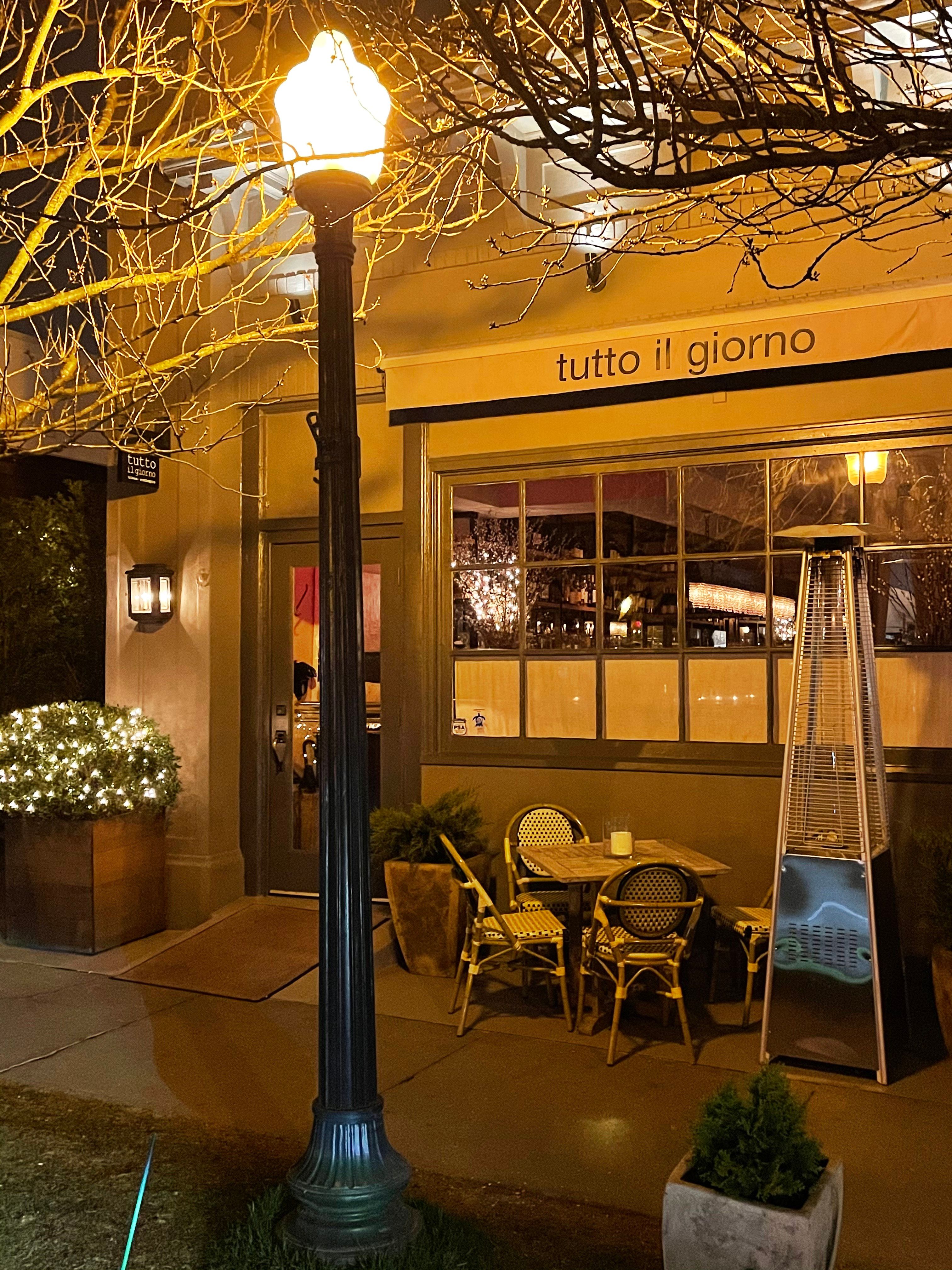
on Main Street is the heartbeat of the Southampton dining scene. Milanese-Italian cooking built around an espresso bar, pastries baked daily, handcrafted gelato, and a vine-covered outdoor patio that feels genuinely transported from the streets of Milan. Morning cappuccinos and freshly baked cornetti give way to refined lunches and elegant evening dinners. It is an all-day destination that locals treat as part of their daily rhythm.
brings a French bistro menu to the village in a garden setting, and is the reliable dinner choice when you want a table rather than a scene.
serves southern Italian in the village, a sibling of the Sag Harbor location.
on the eastern side of the village, cover the casual end, and the Union rooms are where a lot of village business actually gets done off season.
sits at the center of Main Street and stays open year-round, which makes it the default when nothing else is.
National brands, jewelers, banks, pharmacy, and essential year-round services
Galleries, antiques, home and design shops
Exhibitions, film, and performances
Main Street and Jobs Lane together form Southampton’s largest retail district
Long Island Rail Road Montauk Branch station, a short walk from Main Street
Hospital located just north of the village core on Meeting House Lane
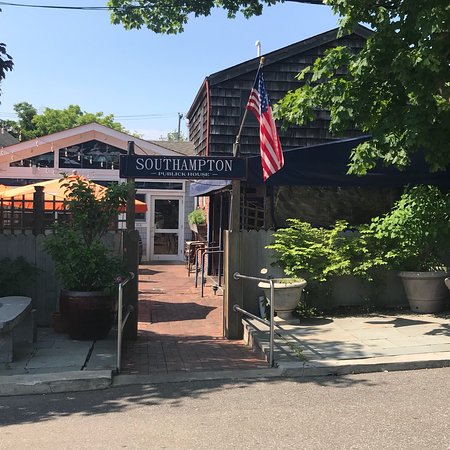
Ocean beach with pavilion, concession, restrooms, and seasonal parking
No permit is required to arrive on foot or by bicycle
A village beach parking permit is required during the season; daily passes are available in person at Cooper's Beach
Southampton Village sits inside the Southampton Union Free School District, which runs three schools covering the full span from elementary through high school, so a village family stays in one district for a child's entire education. The district enrolls roughly 1,270 to 1,330 students with a student-to-teacher ratio of about 8 to 1. Its boundary is not the same as the village boundary and does not follow the postal boundary either, so buyers near the village edges should verify the district by address before relying on it.
Southampton Elementary School occupies part of the historic school complex on the eastern side of the village business district, a Georgian-style building that opened in 1912 and was designed by the architect William Lawrence Bottomley. Much of that original complex is now Southampton Town Hall. Southampton Intermediate School has moved to the campus it shares with the high school on Narrow Lane. Both sit within the village, which for many families means a short drive or a walk rather than a bus route.
Southampton High School is on Narrow Lane on the eastern side of the village, in a building that opened in 1974 and shares its campus with the intermediate school. It serves grades 9 through 12 within the district and is the only public high school inside any Hamptons village other than Pierson in Sag Harbor, which matters for families who want their children schooled where they live rather than driven to the next town.
Independent options are unusually close here. Our Lady of the Hamptons Regional Catholic School is in the village and serves the younger grades. The Ross School runs an Upper School in East Hampton and a Lower School in Bridgehampton, and The Hayground School is in Bridgehampton, all a short drive east. For higher education, Stony Brook University maintains its Southampton campus within the village area, which also hosts the Avram Theater and public programming, and Suffolk County Community College's Eastern Campus is in Riverhead.
Approximately 4,550 year-round in the Incorporated Village of Southampton (2020 Census); summer population is far higher
Settled June 12, 1640 by English colonists from Lynn, Massachusetts, landing at Conscience Point; incorporated as a village in 1894; New York State's oldest English settlement
Approximately 7.4 square miles, of which about 6.5 is land
Incorporated village within the Town of Southampton, and the seat of town government. The village has its own mayor and board, police department, zoning, and beach permit system in addition to town and county government
11968 (also covers Shinnecock Hills, North Sea, and Tuckahoe outside the village)
Five in 2025, with total village dollar volume up 63 percent to approximately $676 million
Southampton Union Free School District: Southampton Elementary, Southampton Intermediate, and Southampton High School
Southampton station on the LIRR Montauk Branch within walking distance of Main Street; Hampton Jitney service; Stony Brook Southampton Hospital in the village; County Road 39 and Montauk Highway are the through roads
Five: Cooper's, Old Town, Halsey Neck, Fowler, and Dune Beach. A village permit is required and the Town of Southampton permit is not valid
Approximately $4,337,500 on 100 sales (Suffolk Vision Inc. recorded sales, year-end 2025), up 29.5 percent year over year, the largest median increase of the twelve East End markets tracked; the wider Southampton area including North Sea was $1,875,000 on 177 sales
The Southampton Village median sale price was $4,337,500 in 2025 on 100 closings, according to recorded sales data for 2025, up 29.5 percent year over year, which was the largest median increase of any of the twelve East End markets the brokerage tracks. Village dollar volume rose 63 percent to about $676 million and five properties traded above $20 million. Within the village the range is wide: houses on the northern fringe have commonly run about $1.5 million to $4 million, village core houses about $2.5 million to $6 million, Olde Towne roughly $5 million to $20 million, and the estate section about $8 million to $30 million, with Meadow Lane oceanfront well above that. For comparison, the wider Southampton area including North Sea recorded a median of $1,875,000.
Southampton Village is an incorporated village of about 7.4 square miles; Southampton also refers to the much larger Town of Southampton that surrounds it. The town contains seven incorporated villages, including this one, Sag Harbor, North Haven, Sagaponack, Quogue, Westhampton Beach, and West Hampton Dunes, plus hamlets such as Bridgehampton, Water Mill, Noyac, Hampton Bays, North Sea, Shinnecock Hills, and Tuckahoe. The practical difference is that village property owners pay a village tax on top of town and county taxes, fall under village zoning and village police, and use village beaches on a village permit that town residents outside the village have to buy separately. A 11968 mailing address does not tell you whether a house is inside the village.
The village runs five ocean beaches: Cooper's Beach at the end of Cooper's Neck Lane, Old Town Beach at the end of Old Town Road, Halsey Neck Beach, Fowler Beach, and Dune Beach on Meadow Lane. Cooper's has a pavilion, concession, and restrooms and has been ranked the top beach in the United States in the annual Dr. Beach list. A village beach parking permit is required in season, and the Town of Southampton permit is not valid at any village beach, which is the most common practical mistake new owners and renters make. Cooper's is the only village beach that sells daily passes, bought in person at the booth, and Dune Beach is restricted to resident parking. No permit is needed to arrive on foot or by bicycle, and Cooper's is about a seven-minute walk from Main Street.
The estate section is the band of streets between the village center and the Atlantic, and it holds the largest concentration of turn-of-the-century summer estates in the Hamptons. The principal lanes are Gin Lane, First Neck Lane, Ox Pasture Road, Halsey Neck Lane, Captain's Neck Lane, Great Plains Road, and Coopers Neck Lane. Houses are predominantly shingle-style and Colonial Revival, built from the 1890s onward, on one to five acres behind hedges planted a century ago, and many sit on parcels subdivided from much larger original estates. Tennis courts and pool houses are common, the Meadow Club is within the section, and Cooper's Beach is at its southern edge. Recent activity has commonly run from about $8 million to $30 million, with oceanfront on Meadow Lane and Gin Lane well above that.
Southampton Village is served by the Southampton Union Free School District, which runs three schools covering elementary through high school, so a village family stays in one district throughout. Enrollment is roughly 1,270 to 1,330 students with a student-to-teacher ratio of about 8 to 1. Southampton Elementary occupies part of the historic 1912 school complex near the business district, and Southampton Intermediate and Southampton High School share a campus on Narrow Lane on the eastern side of the village. Independent options include Our Lady of the Hamptons Regional Catholic School in the village and the Ross School and The Hayground School a short drive east. The district boundary, the village boundary, and the postal boundary are three different lines, so verify the district for a specific address.
Yes to both, and it is the only Hamptons village that has them together. Stony Brook Southampton Hospital is in the village on Meeting House Lane and is the South Fork's hospital, and Southampton station sits on the Long Island Rail Road Montauk Branch within walking distance of Main Street, with Hampton Jitney service to Manhattan as well. Combined with a full commercial Main Street that carries banks, a pharmacy, and everyday services, this is the strongest year-round livability case of any village in the Hamptons, and it is the reason a meaningful share of Southampton owners are here in February rather than only in July.
The CeeJackTeam works the whole East End rather than one village, which matters in an estate market where much of the best inventory never reaches a public listing and where the buyer weighing Southampton is usually also weighing East Hampton, Bridgehampton, and Sag Harbor. Cee Scott Brown and Jack Pearson, with Partner Agent Denise Wilder, bring over 60 years of combined experience and over $1.5 billion in sales volume, have been named Top Producer 13 years in a row, and have held a place on the Top Producer Presidents Council for 10 of those years. Since joining Compass in 2020 the team has closed 425+ deals from Westhampton to Montauk. Cee came out of two decades in the New York art world and Jack out of luxury fashion retail, which is directly relevant to marketing a landmarked shingle cottage or an architecturally significant modern house. The team also works from the Compass office in Southampton, so there is someone working this market from close by rather than driving in for showings. The team also runs a dedicated rental operation, which is how many Southampton buyers start.

Southampton rewards knowing exactly where the lines are, and there are several: the village boundary, the school district, the historic district, and the difference between a village beach permit and a town one. The CeeJackTeam has worked the East End since 2006, across the estate section, the village core, Olde Towne, and the oceanfront on Meadow Lane. For buyers, we will tell you which side of each line an address falls on before you fall for the house. For sellers, we will price against village closings rather than a town-wide median that understates you by more than half. Call 516-457-7111 or email ceejackteam@compass.com to talk it through.