
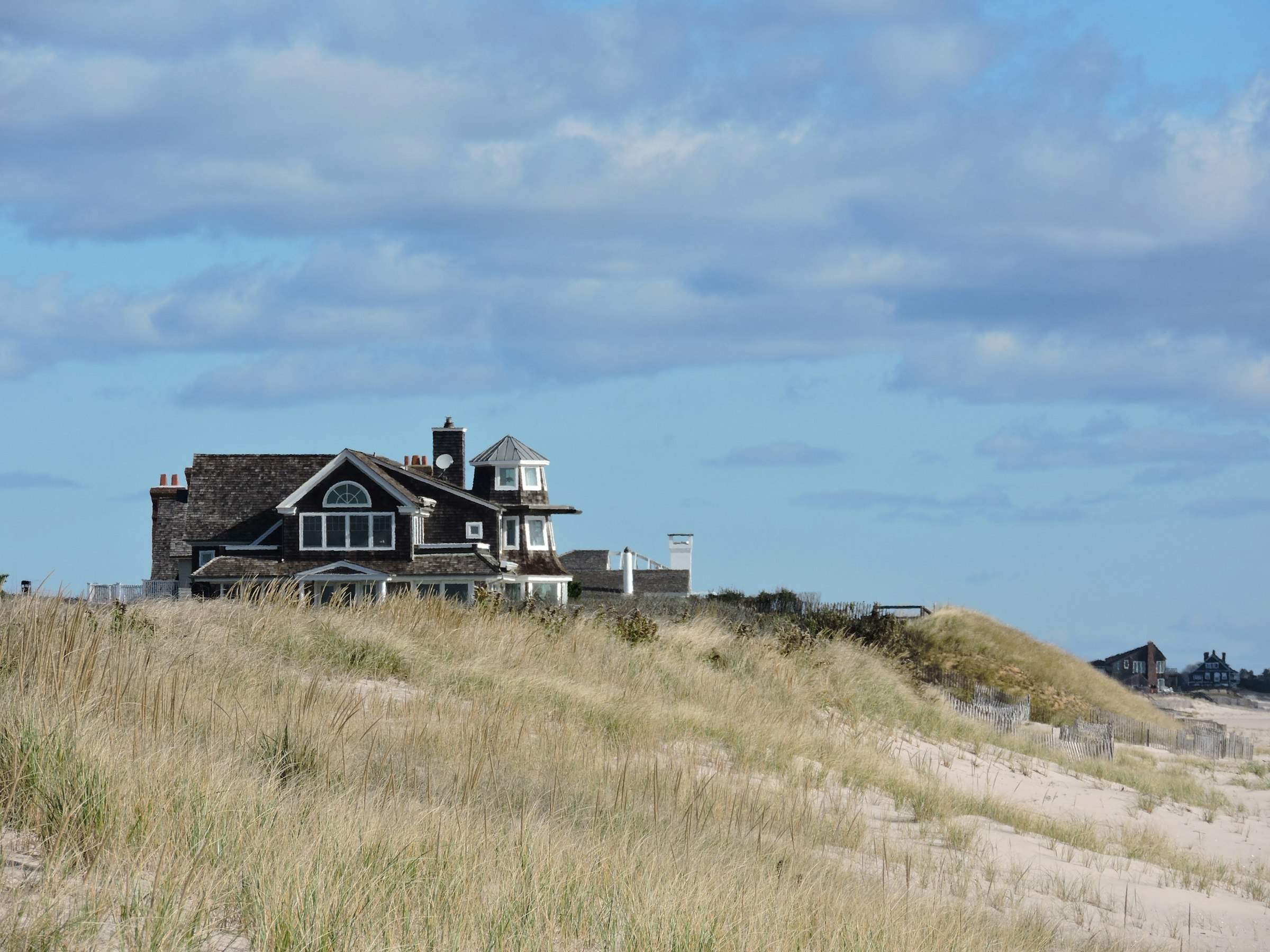
Choosing a Hamptons neighborhood is about more than finding a beautiful house. The right location should fit how you spend weekends, where your children attend school, how often you need to reach Manhattan, and whether you want a walkable village or a private property with more land. Working with experienced Hamptons real estate agents can help buyers understand the differences between local communities and identify areas that align with their lifestyle, priorities, and long-term plans.
Each Hamptons community offers a distinct atmosphere, from lively village centers and waterfront settings to quiet roads, expansive properties, and secluded estates. Proximity to beaches, restaurants, shopping, marinas, schools, and transportation can also influence which neighborhood is the best fit. This guide explores several major East End communities to help buyers narrow their search around lifestyle first and property second.
Quick Facts
Sag Harbor suits buyers who want a year-round village atmosphere, restaurants, shops, harbor access, and a relatively walkable lifestyle.
East Hampton offers a broad range of homes and settings, from village properties to larger parcels in areas such as Springs and East Hampton North.
Bridgehampton is particularly suited to buyers seeking large, high-end properties, proximity to ocean beaches, and a central South Fork location.
Water Mill appeals to buyers who prioritize privacy, acreage, estate-style homes, and access to both Southampton and Bridgehampton.
June 2026 Realtor.com data showed median listing prices of $3.995 million in Sag Harbor, $2.815 million in East Hampton, $9.6475 million in Bridgehampton, and $7.995 million in Water Mill. These are community-level market measures and should not be treated as direct comparisons of identical property types.
Start With Your Lifestyle, Not the Listing
The Hamptons can look compact on a map, but the experience of living in each community can be very different. A buyer who wants to walk to dinner in Sag Harbor has a different set of priorities from someone who wants several acres in Water Mill.
Before looking at properties, identify what your typical Saturday should look like.
Do you want to walk from your front door to Main Street? Do you picture mornings at the beach? Is a pool and large lawn more important than proximity to restaurants? Will the house be occupied primarily in summer, or do you expect to spend most of the year there?
Those answers can quickly narrow the search.
The CeeJackTeam serves communities across the East End and maintains offices at 84 Main Street in Sag Harbor and 2424 Main Street in Bridgehampton. The team reports more than $1.5 billion in sales volume and more than 60 years of combined industry experience.
Which Hamptons Neighborhood Fits Your Lifestyle?
Sag Harbor for Village Living and Year-Round Convenience
Sag Harbor is one of the strongest choices for buyers who want a community that remains active beyond the summer season.
The village's Main Street, waterfront, restaurants, galleries, and independent businesses create a more traditional village environment than many of the Hamptons' estate areas. Buyers should also look at nearby Noyack and North Haven when they want greater privacy while remaining close to Sag Harbor.
For families, the Sag Harbor Union Free School District is worth examining carefully. Niche currently gives the district a B overall grade, with an 8:1 student-teacher ratio and a reported 92% average graduation rate. The district serves students from pre-kindergarten through grade 12.
The June 2026 Sag Harbor market data requires some context. Realtor.com reported a $3.995 million median listing price and a $4.675 million median sold price, along with $1,283 per square foot and 91 median days on market.
The fact that the sold median exceeds the listing median should not be read as evidence that Sag Harbor homes generally sell above asking. The two figures represent separate median calculations and can be influenced by the different mix of homes listed and homes that closed during the period. Buyers should therefore use comparable closed sales, rather than the relationship between these two market-wide medians, when evaluating a specific property.
For ZIP code 11963, Realtor.com reported a $3.9 million median listing price, a $4.675 million median sold price, and 85 median days on market in June 2026.
East Hampton for Variety and Access
East Hampton can be a better fit if you want more choice in housing types and settings.
East Hampton Village offers proximity to shops, restaurants, beaches, and cultural attractions, while areas such as Springs and East Hampton North provide a different feel, including larger lots and more residential surroundings.
School district boundaries are especially important here. A property in East Hampton Village or another part of the East Hampton Union Free School District may have a different school arrangement from a property in nearby Springs. Buyers should verify the district serving the exact address rather than relying only on the community name.
The East Hampton Union Free School District is a PK-12 district. Niche currently gives it an A overall grade, while NYSED reports 1,702 public school students and an 85% four-year graduation rate for 2024-25.
The June 2026 East Hampton market data also shows why buyers should not judge value from asking prices alone. The median listing price was $2.815 million, while the median sold price was $2.275 million. Median price per square foot was $1,063, active listings totaled 266, and median days on market reached 120.
That spread between listing and sold prices reinforces the value of studying comparable sales rather than simply comparing asking prices.
Bridgehampton for Estates, Beaches, and a Central Location
Bridgehampton tends to attract buyers looking for larger homes, substantial lots, and a central South Fork location.
The area around Bridgehampton's Main Street provides restaurants, shops, galleries, and everyday conveniences, while properties farther from the commercial center can offer considerably more privacy. Ocean Road and nearby beach areas are also major lifestyle considerations for buyers prioritizing coastal access.
Realtor.com reported a June 2026 median listing price of $9.6475 million, $1,714 per square foot, 69 active listings, and 85 median days on market. The median listing price was up 11.62% year over year.
For ZIP code 11932, the median listing price was even higher at $10.495 million, with $1,999 per square foot and 51 active listings.
Realtor.com's June 2026 Bridgehampton community summary does not provide a separate community-level median sold price, so buyers should not compare the $9.65 million Bridgehampton asking-price figure directly with sold-price figures from other communities. The distinction matters because asking and closing prices measure different parts of the market.
Those figures also do not mean every Bridgehampton property falls into that range. Pricing can vary dramatically based on property type, lot size, location, condition, proximity to the ocean, and other characteristics.
Water Mill for Privacy and Estate-Style Living
Water Mill is a natural choice for buyers who want more land without giving up access to the South Fork's major villages.
Large properties, farmland, ponds, waterfront settings, and estate-style homes are part of the area's appeal. Its location also gives residents practical access to Southampton and Bridgehampton.
June 2026 Realtor.com data showed a $7.995 million median listing price and a $3.75125 million median sold price in Water Mill, with $1,283 per square foot, 103 active listings, and 89 median days on market.
The $1,283 per-square-foot figure is the same as the figure reported for Sag Harbor. While an exact match may initially look unusual, it is possible because price-per-square-foot is a separate median measure and does not need to move in direct proportion to a community's overall median home price. The figure is therefore retained rather than treated as a copy error.
For ZIP code 11976, the median listing price was $7.495 million, median price per square foot was $1,272, and the median sold price was $3.75125 million.
Water Mill also requires careful school-district verification. The community does not function as one uniform school district for every address. Properties can fall within different districts, including Southampton and Bridgehampton, so buyers should verify the school district tied to the specific parcel before making an offer. Current property records show examples of Water Mill properties assigned to the Bridgehampton Union Free School District, while the Southampton UFSD encompasses the Water Mill hamlet as well.
Buyers considering Water Mill should also pay close attention to lot characteristics, wetlands, flood exposure, zoning, agricultural considerations, septic systems, and what can realistically be added to the property. A large parcel is not automatically a development opportunity.
How Should Your Budget Influence the Neighborhood?
Budget should determine more than the size of the house. It can determine which community makes the most sense.
A buyer with a $3 million budget, for example, may have a very different search experience in East Hampton than in Bridgehampton or Water Mill. June 2026 data shows why buyers should compare like with like: East Hampton's median sold price was $2.275 million, Water Mill's was $3.75125 million, while Bridgehampton's published community figure was a $9.6475 million median listing price rather than a median sold price.
That doesn't mean one neighborhood is automatically "better value." It means buyers need to compare the property itself with the location.
Look at the lot, renovation history, taxes, pool, accessory structures, waterfront exposure, proximity to commercial areas, and expected maintenance. A lower purchase price can become less attractive if the property needs significant work or has ongoing costs that don't fit your plans.
Understand the Town, Village, and Community Distinctions
One important detail in Hamptons real estate is that a community name does not always correspond to the legal municipality used in a market report.
For example, Bridgehampton and Water Mill are hamlets within the Town of Southampton, while Sag Harbor and East Hampton can refer to both incorporated villages and broader surrounding community areas. Market websites may also use community or ZIP-code boundaries that do not match municipal boundaries.
That distinction matters when reviewing prices, property taxes, zoning, school districts, rental regulations, and other local rules.
Throughout your search, ask whether a figure refers to the Town, Village, hamlet, ZIP code, or market area. A median for a broader East Hampton market area should not automatically be interpreted as the median for East Hampton Village alone.
The same principle applies to Southampton. When a source provides a Southampton market figure, determine whether it refers to the Town, Village, ZIP code, or another defined market area before comparing it with Sag Harbor, Bridgehampton, or Water Mill.
What Should Families Consider Beyond the House?
Families should evaluate the school district, daily driving patterns, activities, and the amount of year-round infrastructure available.
The East End's school structure is more unusual than a simple community-to-district comparison suggests. Several small districts operate their own elementary schools but do not maintain a high school. East Hampton Union Free School District provides secondary education for students from neighboring districts including Amagansett, Montauk, Sagaponack, Springs, and Wainscott through tuition arrangements.
Springs is a particularly important example. Springs has its own Union Free School District and Springs School serves students through grade 8. A Springs address should therefore not simply be described as being in the East Hampton school district. Families should verify the exact elementary and middle-school assignment and understand the secondary-school arrangement before purchasing.
The wider structure is also unusual. Current school data shows that Wainscott School serves a very small elementary population, while Sagaponack School serves students through grade 3. Bridgehampton School, by contrast, serves PK-12. Amagansett and Springs also operate their own schools before students reach secondary education.
For buyers in Sagaponack, Wainscott, Amagansett, Springs, or other areas with unusual grade-level arrangements, the school question should therefore be verified by address and grade rather than answered solely by the mailing community.
School ratings are another useful starting point, but they should not be the only consideration. Niche currently rates Sag Harbor UFSD B and East Hampton UFSD A.
Also consider the practical side of family life. How long does it take to get to school? Where will teenagers go for activities? How far is the nearest grocery store? Is the home comfortable during winter, or is it primarily configured as a summer residence?
These questions often matter more after closing than the view from the living room.
What Should Beach Lovers Look For?
Beach access isn't simply a question of being "near the ocean."
Buyers should determine which beaches they realistically expect to use and understand the rules that apply to them. Parking regulations, resident access, permits, distance from the house, and seasonal traffic can all affect the experience.
A property that looks close to the beach on a map may require a car during the busiest part of summer. Another home farther inland might provide easier access to restaurants, shops, and everyday services.
For waterfront or near-water properties, buyers should also investigate flood exposure, elevation, drainage, insurance requirements, and potential storm-related risks before proceeding.
What Taxes and Closing Costs Should Hamptons Buyers Consider?
Purchase price is only one part of the financial picture.
For properties in the Town of Southampton and Town of East Hampton, buyers should understand the Peconic Bay Region Community Preservation Fund tax. Southampton currently describes the CPF tax as a 2.5% transfer tax, including the 0.5% Community Housing Fund component. An exemption applies to the first $400,000 of an improved residential parcel when the consideration is $2 million or less. For transactions above $2 million, the exemption does not apply.
New York State also imposes a 1% mansion tax on residential transactions of $1 million or more, paid by the buyer.
At the $2.625 million Hamptons median sold price used in current market reporting, a simplified example would be approximately $65,625 in Peconic Bay transfer tax plus $26,250 in mansion tax, or $91,875 combined, before considering any other applicable closing costs or exemptions. The $2 million CPF exemption would not apply at that price.
These figures are examples rather than a closing statement. Buyers should confirm the current tax treatment with their attorney and the applicable Town office before purchasing.
Buyers should also understand that New York's STAR program is intended for primary residences, with current eligibility rules tied to primary-residence status and income. The STAR exemption is no longer available to new homeowners, although the STAR credit remains available to eligible primary-residence owners.
For buyers purchasing a second home or seasonal residence, STAR should therefore not be assumed to reduce the property's school-tax burden.
What Should You Know About Septic Systems?
Many Hamptons properties rely on private wastewater systems, making septic due diligence an important part of evaluating an older home or property with expansion plans.
Buyers should determine the existing system's age, condition, permitted capacity, maintenance history, and whether proposed improvements could require an upgraded wastewater solution. Suffolk County regulates innovative and alternative onsite wastewater treatment systems, commonly referred to as I/A OWTS.
There is also financial assistance available for eligible homeowners. In August 2026, Suffolk County announced a streamlined Septic Improvement Grant Program through which eligible property owners may receive grants of up to $45,000 toward advanced wastewater treatment technology.
Because eligibility and program terms can change, buyers should verify current requirements with Suffolk County before relying on a grant when budgeting for a septic replacement or upgrade.
What Should Buyers Know About Rental Rules?
If rental income is part of your intended use, check the applicable Town's rules before purchasing.
The Town of Southampton currently requires a rental permit for homes being rented for any period, and its current FAQ states that the minimum rental period is 14 days. Rentals shorter than that are treated as transient rentals and are not permitted under the Town's current rules.
The Town of East Hampton also operates a rental registration system. Its Building Department provides rental-registration applications, and the Town's rules require rental properties to be registered and include registration information in applicable rental advertising.
These rules can vary by municipality and may not apply identically inside incorporated villages. If rental use is part of your purchase strategy, verify the current requirements for the exact property before making an offer.
Why Local Market Knowledge Matters
A neighborhood search becomes much more useful when your real estate team can explain what isn't obvious from an online listing.
The best choice of Hamptons real estate professional isn't simply someone who can open doors to listings. You want someone who can distinguish between a home that is simply expensive and one where the location, land, architecture, condition, and future potential justify the asking price.
A real estate team Hamptons buyers can rely on should also understand the differences between village properties, waterfront homes, historic houses, new construction, and larger estate parcels.
The CeeJackTeam's current neighborhood coverage includes Southampton, Water Mill, Bridgehampton, Sag Harbor, East Hampton, Wainscott, Sagaponack, Montauk, and Amagansett. Its website also provides dedicated neighborhood information for these communities.
A Simple Way to Narrow Your Search
Start with three priorities that genuinely affect how you want to live.
If walkability and year-round village life are at the top, start with Sag Harbor. If you want a wider range of homes and access to beaches, restaurants, and village amenities, explore East Hampton. If privacy, acreage, and estate-style living matter most, compare Water Mill and Bridgehampton.
Then visit your top neighborhoods at different times of day.
Drive the route from each property to the places you use most. Walk the village streets. Visit local shops. Look at the road during a busy summer weekend rather than relying only on a quiet off-season showing.
This is one of the most practical ways top Hamptons realtors can help buyers make a decision based on actual lifestyle rather than listing photography.
Questions to Ask Before Choosing a Neighborhood
Before making an offer, ask:
Does this location work for how I actually spend time in the Hamptons?
Will I be comfortable here in January as well as July?
Which school district serves the property at each relevant grade level?
Is the property within the Town or Village rules that apply to my intended use?
What are the annual property taxes and insurance costs?
What transfer taxes and other closing costs should I budget for?
Is the property in or near a flood zone?
Does the property rely on septic, and what is its current condition?
What restrictions apply to pools, additions, accessory structures, or landscaping?
What beach access rules apply to the beaches I expect to use?
Can the property legally be rented under current local regulations?
How does the property's price compare with recent comparable sales?
The answers should help you decide whether you're buying a house you like or a location that genuinely fits your life.
Find the Right Hamptons Neighborhood for You
The right Hamptons community isn't necessarily the one with the highest price or the most famous address. It's the one that makes sense for the way you want to live, both during summer and throughout the rest of the year.
The CeeJackTeam can help buyers compare communities and properties across the East End, from Sag Harbor and Water Mill to Bridgehampton and East Hampton.
Explore the team's Hamptons neighborhood guides for additional community-specific information before narrowing your property search.
FAQ
Which Hamptons neighborhood is best for year-round living?
Sag Harbor is one of the strongest choices for year-round living because of its village center, restaurants, shops, harbor, and established community infrastructure. East Hampton can also work well for buyers who want more housing variety and access to a broader range of services.
Is Sag Harbor more expensive than East Hampton?
The answer depends on whether you are comparing asking prices, sold prices, villages, hamlets, ZIP codes, or broader market areas. In June 2026, Realtor.com reported a $4.675 million median sold price for Sag Harbor and a $2.275 million median sold price for its East Hampton market comparison, while Sag Harbor's median listing price was $3.995 million. Buyers should compare comparable properties rather than relying on market-wide medians alone.
Which Hamptons area is best for large estates?
Water Mill and Bridgehampton are among the strongest choices for buyers seeking large estates and significant land. June 2026 Realtor.com data showed median listing prices of $7.995 million in Water Mill and $9.6475 million in Bridgehampton. Actual property values vary substantially based on acreage, location, condition, water access, and improvements.
Are Hamptons school districts important when buying?
Yes. School districts can affect both a property's suitability for a family and its future resale appeal. Buyers should verify the school district for the exact address because communities such as Springs, Wainscott, Sagaponack, Amagansett, and Water Mill can have different school arrangements depending on the property and grade level.
How long do Hamptons homes typically stay on the market?
Days on market vary significantly by community and property type. June 2026 Realtor.com data showed median days on market of 91 days in Sag Harbor, 120 days in East Hampton, 85 days in Bridgehampton, and 89 days in Water Mill.
What taxes should I consider when buying a Hamptons home?
Buyers should consider regular property taxes as well as applicable transaction taxes. The Peconic Bay Region Community Preservation Fund tax is currently 2.5% in the Town of Southampton, with specific exemptions for qualifying transactions of $2 million or less. New York State also imposes a 1% mansion tax on residential transactions of $1 million or more.