
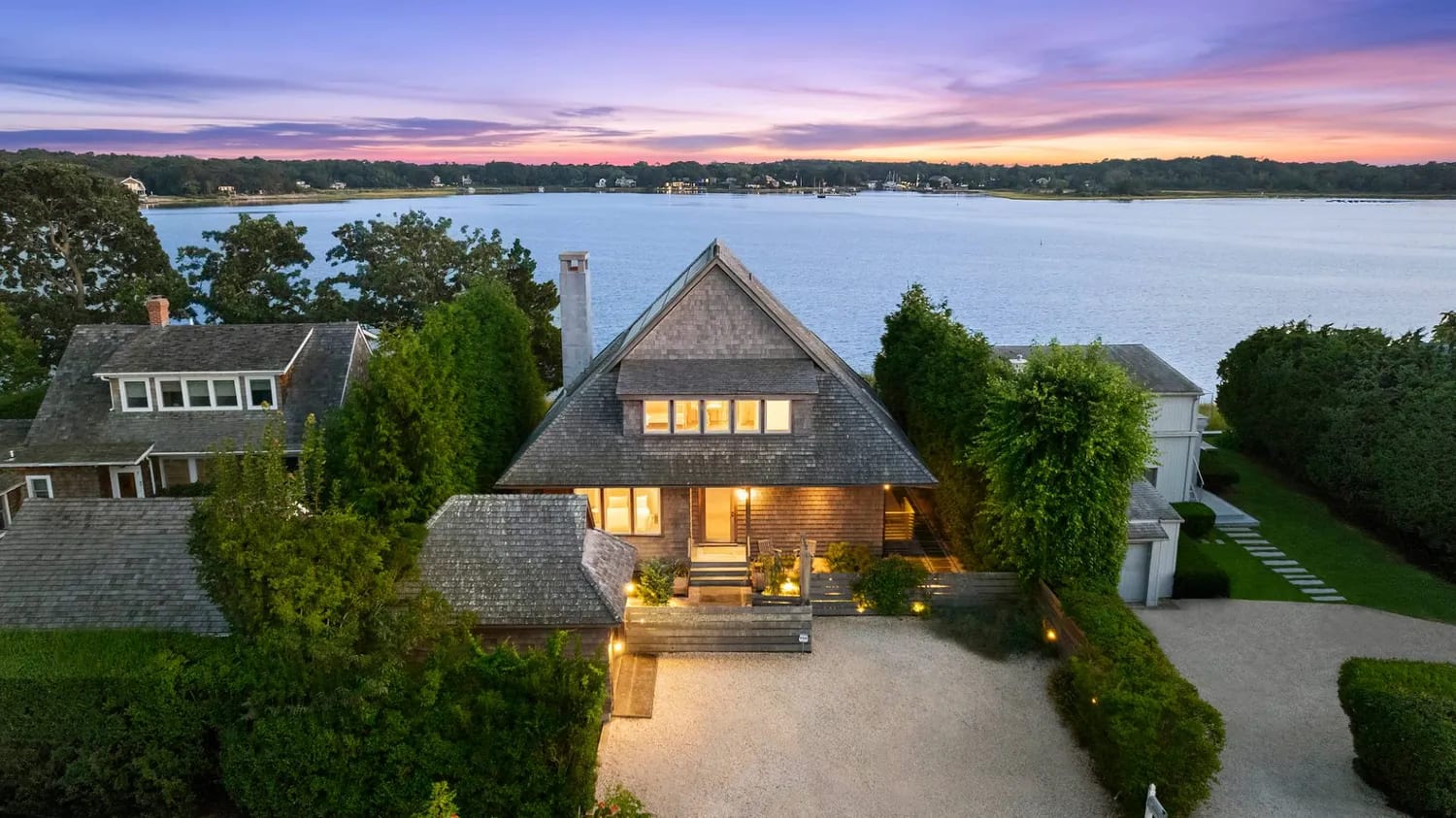
Buying a home in Southampton means looking beyond square footage and asking price. Buyers comparing Southampton homes for sale should consider how location, architecture, outdoor space, coastal exposure, school access, zoning, and property condition can affect both everyday living and long-term value.
Southampton encompasses the incorporated Southampton Village as well as surrounding hamlets and communities within the broader Southampton area. That distinction matters when comparing properties because location can influence pricing, amenities, zoning, school considerations, and the overall character of a home.
The area offers a diverse selection of properties, from historic homes and traditional shingled residences to modern estates and homes designed for year-round coastal living. The right property depends on more than its appearance. Buyers should evaluate proximity to beaches, village centers, transportation, dining, and other amenities while also considering the privacy and character of the surrounding neighborhood.
Outdoor features such as landscaped gardens, patios, pools, and expansive lawns can significantly enhance a home's appeal, while factors such as flood exposure, drainage, heating systems, roofing, and local zoning regulations deserve careful attention during the buying process.
Quick Facts About Southampton Real Estate
- Median sale price: listing and sales data covering Southampton Village and the surrounding 11968 area reported a median sale price of about $3.9 million for the three months ending July 2026, down 11.3% year over year.
- Price per square foot: approximately $1,210 per square foot over the same period, with homes averaging 60 days on the market.
- Current inventory: 241 active homes for sale in Southampton in August 2026, with a median listing price of $3.54 million and 93 median days on market.
- Schools: Southampton Union Free School District serves students from prekindergarten through grade 12 across three schools.
- Coastal considerations: Buyers should review official flood and hurricane evacuation information for the specific property, particularly when evaluating homes near beaches, bays, wetlands, and other low-lying areas.
Because Southampton can refer to the incorporated village, surrounding hamlets, and the broader town area, buyers should always confirm the geography covered by a market statistic before using it to evaluate an individual property.
What Features Matter Most in Southampton Homes?
The most valuable features depend heavily on where a property sits and how it will be used. A summer residence near the ocean may benefit from different characteristics than a year-round home closer to Southampton Village or inland neighborhoods.
Location should come first. Buyers should examine proximity to beaches, village shops, restaurants, schools, transportation, and major roads before becoming attached to a particular house.
The current market also gives buyers more information to work with. Southampton homes sold for an average of 6.41% below asking price in August 2026, with a 94% sale-to-list ratio.
That does not mean every property will sell below its asking price. Highly desirable homes with distinctive locations or strong architectural appeal can behave very differently from ordinary listings.
Look Beyond the Asking Price
Price per square foot is useful, but it should not be treated as a complete valuation method. Two houses with similar interior sizes can have dramatically different values because of land, water proximity, privacy, renovation quality, pool improvements, views, or development potential.
One widely used listing source reported a Southampton median of $1,123 per square foot in August 2026, while a separate three-month figure through July came in at approximately $1,210. The difference between those two numbers demonstrates why buyers should compare properties using the same geographic area, property type, and time period.
Which Southampton Locations Should Buyers Compare?
Southampton encompasses a wide range of residential settings. The experience of living near Southampton Village can differ considerably from owning property in Shinnecock Hills, North Sea, Tuckahoe, or another nearby community.
Southampton Village is particularly relevant for buyers who value proximity to village amenities. Other areas offer larger parcels, greater privacy, water access, or a quieter residential setting.
The communities buyers most often weigh against each other are Southampton Village, Shinnecock Hills, North Sea, Noyack, and Tuckahoe. Each sits differently in terms of lot size, water access, privacy, and distance from the village center, and those differences are usually visible in pricing. Comparing a village property against one several miles inland without accounting for that is one of the more common mistakes in this market.
Southampton Village
For buyers interested in village living, location can be as important as the house itself. Walkability to local businesses, restaurants, cultural destinations, and seasonal activity can influence both daily convenience and long-term desirability.
Village properties can also have specific zoning considerations. The Village of Southampton has separate residential, business, industrial, multifamily, tidal wetland, and tidal floodplain zoning provisions.
Shinnecock Hills and Surrounding Areas
Shinnecock Hills offers a different residential setting, with properties that can appeal to buyers seeking privacy and larger-scale homes. The surrounding geography also makes environmental conditions worth examining before purchase.
Buyers should investigate the specific parcel rather than relying on a neighborhood label. Lot boundaries, permitted uses, wetlands, setbacks, and development restrictions can vary from one property to the next.
Which Architectural Features Are Worth Looking For?
Architecture matters in Southampton because many homes are designed around seasonal living and outdoor entertaining. Buyers may encounter traditional Hamptons-style residences alongside modern construction, renovated historic properties, shingle-style houses, and contemporary homes.
The strongest architectural choice depends on the buyer's priorities. A newer house may offer modern mechanical systems and energy efficiency, while an older property may provide character, established landscaping, and a more traditional Southampton appearance.
Floor Plans for Seasonal and Year-Round Living
A useful floor plan should match how the property will actually be occupied.
Buyers planning frequent summer gatherings may prioritize an open kitchen and living area, generous guest accommodations, outdoor entertaining space, and easy access to a pool. A household using the property throughout the year may place greater emphasis on insulation, heating systems, home offices, storage, and practical circulation.
Bedrooms should also be evaluated carefully. A listing with a high bedroom count is not automatically more functional. The size, privacy, bathroom access, closet space, and placement of guest rooms can matter more.
How Important Are Outdoor Features?
Outdoor space is one of the defining characteristics of many Southampton properties. A well-designed yard can expand the usable living area during the warmer months and make a major difference in how a home functions.
Look at the relationship between the house and the lot rather than simply measuring acreage. A smaller parcel with thoughtful landscaping and a useful pool area may provide a better outdoor experience than a larger property with difficult terrain.
Pools deserve their own inspection. Buyers should determine the pool's age, equipment condition, heating system, drainage, safety features, and maintenance history.
Landscaping should also be examined with an eye toward maintenance. Mature trees can provide privacy and shade, but large trees near structures may create additional maintenance concerns.
Should Buyers Prioritize Water Views and Beach Proximity?
Water views and proximity to beaches can substantially influence Southampton property values, but buyers should examine exactly what the property offers.
A house described as having a water view may have a limited seasonal sightline rather than direct waterfront access. Similarly, being close to a beach does not necessarily mean the property includes private beach rights or convenient access.
Ask specifically about ownership rights, easements, parking arrangements, beach access, and any restrictions associated with the property. Note also that Southampton Village runs its own beach permit system, separate from the Town of Southampton permit, and the two are not interchangeable.
For waterfront or near-water properties, buyers should also consider erosion, drainage, storm exposure, flood mapping, and insurance requirements before making an offer.
What Should Buyers Know About Flood Risk?
Flood risk deserves careful attention in Southampton, particularly for properties near coastal areas, bays, wetlands, and low-lying land.
The Town of Southampton provides an official EVAC Zones Locator based on NOAA's SLOSH hurricane storm-surge modeling. The tool allows residents to identify the evacuation zone associated with a particular home.
A buyer should not assume that two nearby houses have identical exposure. Elevation, proximity to water, construction characteristics, and the property's location within official flood mapping can all affect risk.
Before purchasing, review the property's FEMA flood-zone designation, elevation information, prior flood history where available, drainage, foundation, and insurance requirements.
How Does the School District Affect a Home Search?
School assignment should be confirmed for the individual property rather than inferred from a Southampton mailing address. The district boundary, the village boundary, and the postal boundary are three different lines.
Southampton Union Free School District serves students from prekindergarten through grade 12 and runs three schools: Southampton Elementary, Southampton Intermediate, and Southampton High School. Southampton High School is one of the few public high schools located inside a Hamptons village.
School considerations can be particularly important for buyers planning a year-round residence. Families should verify the assigned schools, transportation arrangements, enrollment information, and current district policies directly with the district before purchasing.
What Zoning Details Should Buyers Check?
Zoning can determine what a homeowner can legally do with a property, so it should be reviewed before assuming that a particular improvement is possible.
The Town of Southampton publishes official zoning maps covering areas from Eastport and Westhampton through Hampton Bays, Shinnecock Hills, Bridgehampton, and the eastern town line.
A buyer considering an addition, pool, detached structure, subdivision, renovation, or other major change should investigate the property's zoning district and applicable restrictions.
This is especially important for land that appears large enough for future development. Lot size alone does not establish development rights.
Check Existing Approvals
Ask for records concerning previous additions, pools, accessory structures, septic systems, wells, variances, and other significant improvements.
A beautifully renovated property can still present complications if work was completed without the necessary approvals. Reviewing municipal records during due diligence can prevent an expensive surprise after closing.
How Does the Current Market Affect Feature Selection?
Current Southampton data suggests buyers have more negotiating room than during the strongest seller-driven periods of the market.
Listing data showed 241 homes for sale in August 2026, with inventory down 23.37% year over year. The median listing price was $3.54 million, down 1.80% from the prior year, while median days on market reached 93.
A separate three-month dataset through July 2026 reported a $3.9 million median sale price and approximately 60 days on market, covering Southampton Village and the surrounding 11968 area. Buyers should not treat that figure as a universal median for every hamlet or community associated with the Southampton name.
The differences are partly a reminder that real estate data varies according to methodology, geography, property mix, and time period. Buyers should compare recent closed sales that closely resemble the property they are considering rather than relying on a single market statistic.
In a market where transaction volume can make short-term statistics move noticeably, an 11.3% year-over-year change should also be considered alongside the types and locations of the properties that sold during the measurement period.
Which Interior Features Should Buyers Inspect Closely?
Cosmetic finishes are easy to notice, but the less visible systems can have a greater effect on ownership costs.
Pay particular attention to the roof, windows, heating and cooling equipment, electrical service, plumbing, insulation, septic system, drainage, and foundation. The inspection should also account for the property's age and construction type.
A newer kitchen or designer bathroom can improve the living experience, but those improvements should not distract from major mechanical or structural concerns.
For homes intended as seasonal properties, heating and winterization deserve additional attention. A house that sits vacant for extended periods needs systems that can be monitored and protected appropriately.
What Makes a Feature a Long-Term Value?
A feature generally has stronger long-term appeal when it improves the property's usability without creating excessive maintenance or regulatory complications.
Privacy, functional outdoor space, quality construction, strong architectural design, desirable location, and flexible living space can remain relevant across changing buyer preferences.
The same principle applies to renovations. A thoughtful improvement that fits the property and neighborhood can be more valuable than an expensive upgrade chosen primarily for appearance.
Buyers should also consider how easily the property could appeal to the next owner. A highly personalized design may work perfectly for one household but narrow the future buyer pool.
What Closing Costs Should Southampton Buyers Budget For?
The purchase price is not the only major expense buyers should plan for when purchasing a Southampton property. East End buyers should account for applicable transfer taxes in addition to other closing costs.
The Peconic Bay Community Preservation Fund transfer tax is 2%, while the Community Housing Fund surcharge adds another 0.5% for applicable purchases, subject to the town's exemption allowances. Under New York law these are paid by the buyer at closing. New York's mansion tax of 1% or more applies to residential purchases of $1 million and up.
On a $3 million home, these buyer-side transfer taxes can add roughly $100,000 at closing, depending on the applicable exemptions and transaction details.
Because exemption allowances and final calculations can affect the amount due, buyers should confirm the current figures and closing-cost calculations with their attorney early in the transaction.
How Should Buyers Compare Southampton Homes?
When comparing Southampton houses for sale, create a property-by-property framework rather than judging homes independently.
Start with location and lot characteristics. Then compare interior square footage, bedroom and bathroom layouts, construction age, renovation history, outdoor amenities, parking, water access, and potential restrictions.
Next, examine the numbers. Listing data showed a Southampton median listing price of $3.54 million in August 2026, while a separate home-value index reported a typical home value of approximately $2.26 million as of July 31, 2026, up 6.3% over the prior year, alongside 159 homes in its for-sale inventory.
Those figures are not interchangeable valuation measures, but together they show why buyers should study both listing and closed-sale data while keeping the geographic coverage of each source in mind.
What Should a Buyer Prioritize Before Making an Offer?
The right priorities usually come down to location, condition, usable space, land characteristics, and plans.
A buyer interested in a summer retreat may place more weight on pool design, entertaining areas, beach access, and outdoor privacy. A year-round household may care more about schools, commuting, heating efficiency, storage, and proximity to everyday services.
The most attractive property is not necessarily the one with the longest feature list. It is the one where the location, physical condition, improvements, ownership costs, and plans make sense together. For anyone researching Southampton real estate, that distinction can make the search considerably more productive.
Closing Thoughts
Finding the right Southampton property is less about counting amenities and more about understanding how location, architecture, land, coastal exposure, schools, regulations, and ownership costs fit together.
For buyers evaluating Southampton homes for sale, the CeeJackTeam can provide local perspective on individual properties and the features that deserve closer attention. The team works the East End from Westhampton to Montauk, with its main office at 84 Main Street in Sag Harbor and a presence in the Compass offices across the East End, including Southampton.
Frequently Asked Questions
What is the median home price in Southampton, NY?
Sales data covering Southampton Village and the surrounding 11968 area reported a median sale price of approximately $3.9 million over the three months ending July 2026, down 11.3% year over year. Because Southampton can refer to the village, the surrounding hamlets, or the wider town, always check which geography a quoted median actually covers.
How long do Southampton homes typically stay on the market?
Approximately 60 days for the three months through July 2026 on one dataset, and a 93-day median in August 2026 on another. The difference reflects the different periods, datasets, and methodologies behind each figure, which is itself a useful reminder to check the basis of any statistic before relying on it.
What school district serves Southampton?
Southampton Union Free School District serves students from prekindergarten through grade 12 and runs three schools. District boundaries do not follow the village or postal boundaries, so buyers should confirm the assigned schools for a specific address directly with the district.
Should buyers be concerned about flood risk in Southampton?
Buyers should review flood and hurricane exposure for every property because coastal conditions vary by location, sometimes significantly between neighboring parcels. The Town of Southampton provides an official evacuation-zone tool based on NOAA storm-surge modeling, and buyers should also review the FEMA flood-zone designation and obtain an insurance quote before committing.
Are zoning rules important when buying a Southampton property?
Yes. Zoning rules can affect additions, pools, accessory structures, subdivision possibilities, and other improvements. Buyers should review the specific property's zoning district, applicable restrictions, and existing municipal approvals before assuming that a planned improvement is possible.
What transfer taxes should Southampton buyers expect?
Applicable buyer-side transfer taxes include the 2% Peconic Bay Community Preservation Fund tax and the 0.5% Community Housing Fund surcharge, subject to applicable exemption allowances, both paid by the buyer at closing. New York's 1% mansion tax applies to residential purchases of $1 million or more. On a $3 million purchase that can total roughly $100,000. Buyers should confirm current exemptions and the final calculation with their attorney.
Revision Note and Items to Verify, delete before publishing Revised to address the client's note, plus four other issues found while making the change.
Word count is roughly 2,750, close to the original 2,690. The changes were surgical rather than expansive. |
Sources and Items to Verify
- Median sale price of about $3.9 million, approximately $1,210 per square foot, and 60 days on market for the three months ending July 2026, covering Southampton Village and the surrounding 11968 area: Redfin Southampton market page, August 2026.
- 241 active listings, $3.54 million median listing price, 93 median days on market, 6.41% average below asking, 94% sale-to-list ratio, $1,123 per square foot, and inventory down 23.37% year over year, all for August 2026: Realtor.com Southampton market page.
- Typical home value of approximately $2.26 million as of July 31, 2026, up 6.3% year over year, with 159 homes in for-sale inventory: Zillow Southampton home values page.
- All of the above should be confirmed and re-dated before publishing, since each is a live market page that changes. Consider refreshing them against the team's own MLS access instead, which would remove the dependency on the portals entirely and is the stronger long-term answer.
- LEGAL REVIEW REQUIRED before publication on the closing costs section and the matching FAQ answer, covering the 2% Community Preservation Fund tax, the 0.5% Community Housing Fund surcharge, the exemption allowances, the statement that these are paid by the buyer, and the New York mansion tax. This is tax information on a brokerage site. The same content on the Southampton neighborhood page carries the same requirement and the two should be reviewed together so they match.
- Southampton Union Free School District structure, three schools, prekindergarten through grade 12, and Southampton High School being one of very few public high schools inside a Hamptons village: confirm with the district. The village high school point is believed correct but was not independently verified.
- The Town of Southampton EVAC Zones Locator and its basis in NOAA SLOSH modeling, and the Town zoning map coverage: confirm both are current.
- Southampton Village operating a separate beach permit system from the Town: confirm in the Village's own wording, consistent with the Southampton Village neighborhood page.
- Internal linking: this article should link to the Southampton and Southampton Village neighborhood pages at first mention, and to the Water Mill and Bridgehampton pages where those hamlets are named. It currently has no internal links at all, which is the largest easy improvement available on it.
- Author name and publish date are still placeholders.