Email
ceejackteam@compass.com
Call
(516) 457-7111
Five village beaches, a Main Street laid out in 1648, and the highest median sale price on the South Fork.
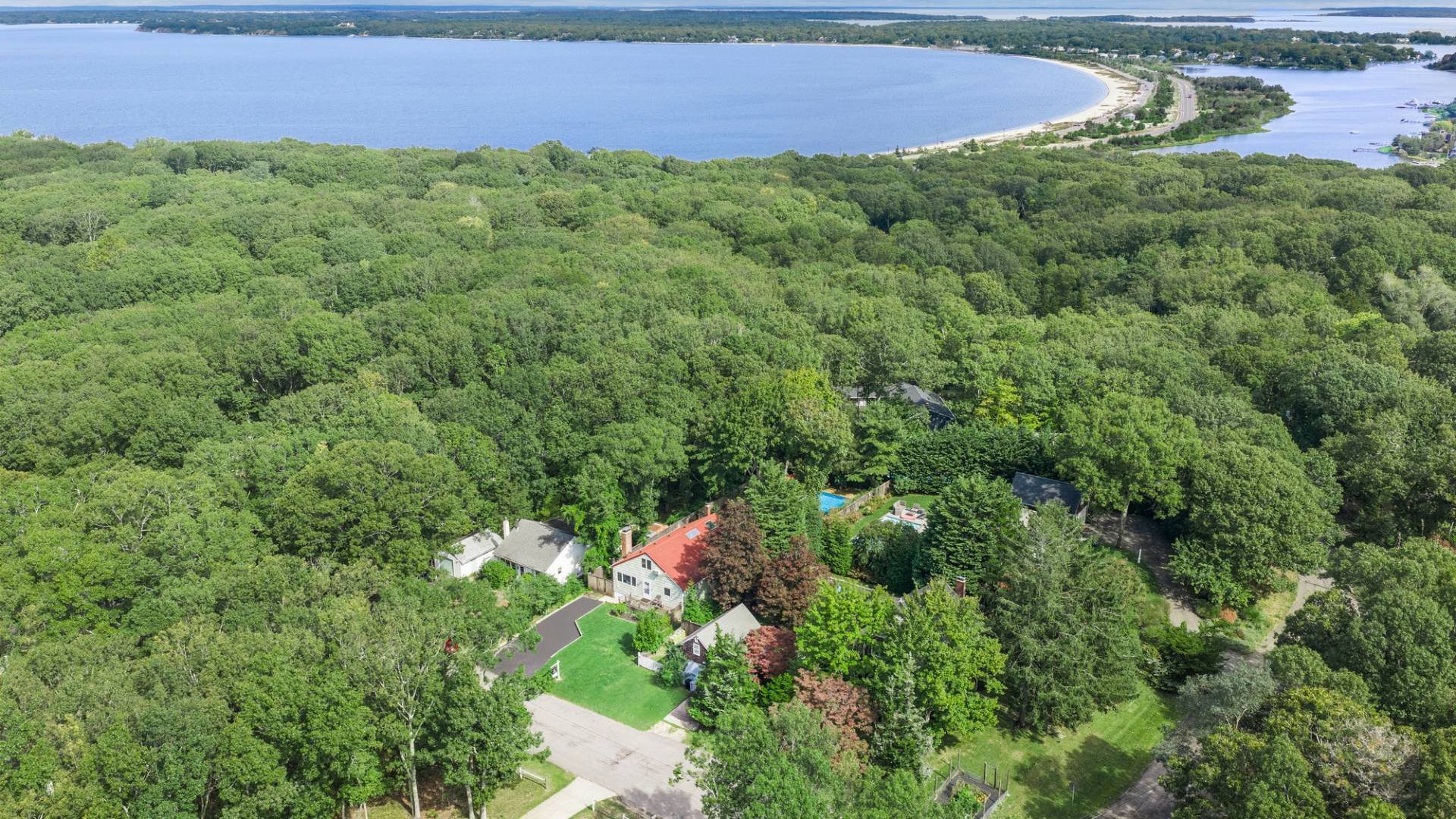
East Hampton Village is an incorporated village of roughly 1,500 year-round residents inside the Town of East Hampton, covering about 4.8 square miles between the Atlantic Ocean and the town's northern woods. It was founded in 1648 by English settlers who bought the land from the Montaukett, and it incorporated as a village in 1920. That word incorporated is the thing buyers most often miss, and it changes what you are actually buying. Anyone weighing East Hampton Village homes for sale is buying into a municipality with its own mayor and board, its own police department, its own zoning and design review, its own beach permit system, and its own village tax layered on top of town and county taxes. Nowhere else on the South Fork combines that level of local control with a walkable Main Street and five ocean beaches.
It is also the most expensive market on the South Fork. Recorded sales data for 2025 put the East Hampton Village median sale price at $5.625 million, the highest of any market the brokerage tracks in the Hamptons, against a regional median that crossed $2 million for the first time in history. The village recorded seven sales above $20 million in 2025, tying Bridgehampton for the most in that bracket. Individual trades set the tone: 33 Lily Pond Lane sold at roughly $39 million in 2025 with about 171 feet of ocean frontage, and in January 2026 two adjoining parcels at 42 Hither Lane and 55 Middle Lane, together more than seven acres, traded at $30 million against a $32 million asking price. In a village of 4.8 square miles, land itself has become the scarce asset.
What you are actually paying for is a village that has protected itself for a century. The historic district covers much of the core, the architectural review board reviews exterior work, and village code limits how large a house can be on a given lot, all of which is why Main Street still reads as it did generations ago and why the estate lanes have not filled in. The institutional density is unmatched on the East End: Guild Hall on Main Street has been presenting exhibitions and theater since 1931 and reopened in 2024 after a full renovation, the East Hampton Library sits a few doors away, and Mulford Farm, Clinton Academy, Home Sweet Home, and Hook Mill are all within walking distance. Buyers who want the opposite of this, meaning fewer rules and no village government, generally end up in Amagansett or Bridgehampton, and that is a genuine fork in the road worth understanding early.
Choosing an agent in this market is mostly a question of access, because a large share of what trades in the village never reaches a public listing. That is the CeeJackTeam's territory, and has been since the team formed in 2006. Cee Scott Brown and Jack Pearson, with Partner Agent Denise Wilder, bring over 60 years of combined experience and over $1.5 billion in sales volume, and have been named Top Producer 13 years in a row, with a place on the Top Producer Presidents Council for 10 of those years. Since joining Compass in 2020 the team has closed 425+ deals from Westhampton to Montauk. Cee spent two decades in the New York art world and Jack built a senior career in luxury fashion retail, backgrounds that matter in a village where a listing may be an 1890s shingle house inside the historic district or a modern build behind a hedge on Lily Pond Lane. Responsive, respectful, real.
The village operates its own beaches: Main Beach at 101 Ocean Avenue, Georgica Beach at 219 Lily Pond Lane, Two Mile Hollow Beach at 50 Two Mile Hollow Road, plus the smaller Egypt Beach and Wiborg Beach. Main, Georgica, and Two Mile Hollow are lifeguarded from 10 a.m. to 5 p.m. in season, and Main Beach has restrooms and the Beach Hut snack bar. Parking runs on a village permit, not the town permit, from May 15 to September 15.
Five Ocean Beaches, All Village-Run.
The village operates its own beaches: Main Beach at 101 Ocean Avenue, Georgica Beach at 219 Lily Pond Lane, Two Mile Hollow Beach at 50 Two Mile Hollow Road, plus the smaller Egypt Beach and Wiborg Beach. Main, Georgica, and Two Mile Hollow are lifeguarded from 10 a.m. to 5 p.m. in season, and Main Beach has restrooms and the Beach Hut snack bar. Parking runs on a village permit, not the town permit, from May 15 to September 15.
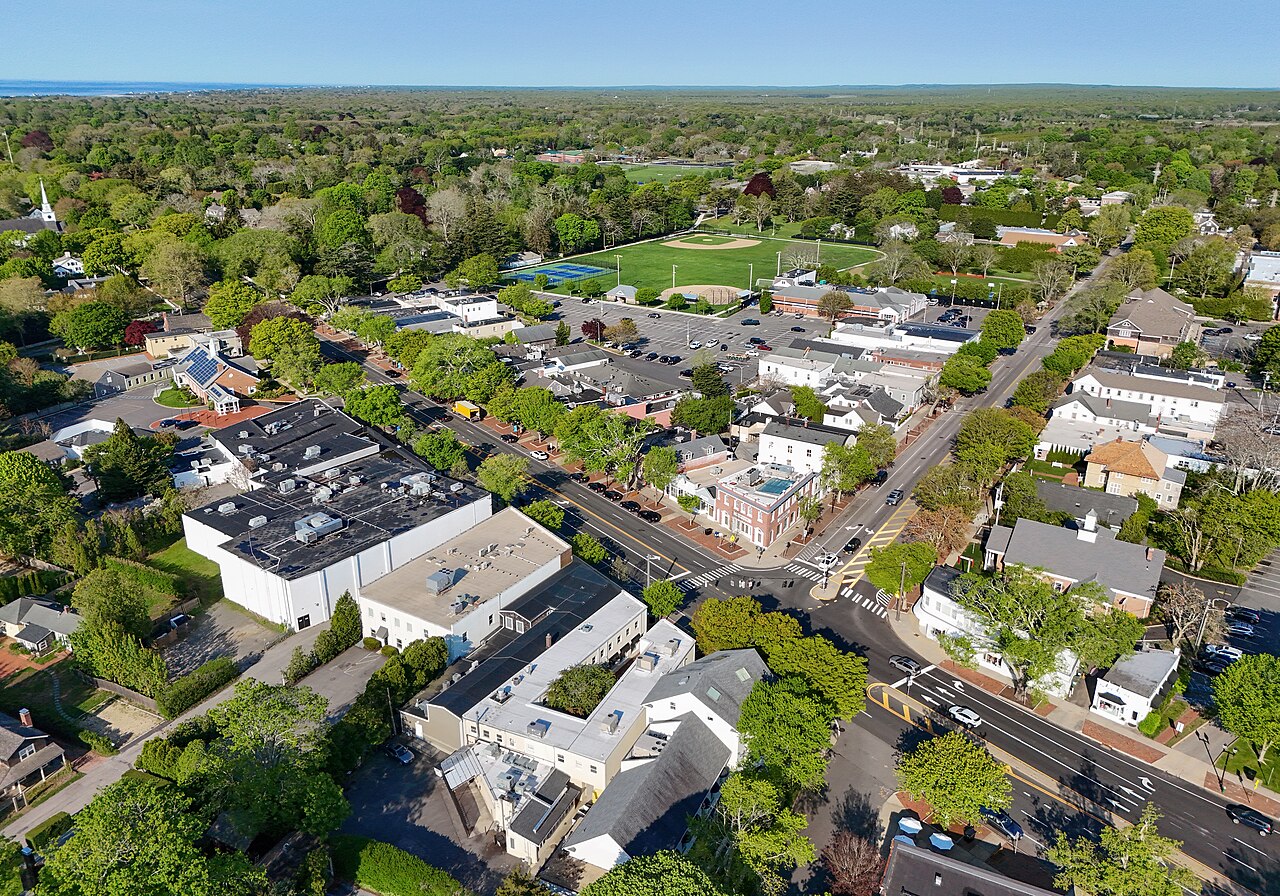
Main Street and Newtown Lane form a genuinely walkable core, with shops, galleries, restaurants, the library, Guild Hall, and the Reutershan and Schenck parking lots all inside a few blocks. Town Pond and the South End Burying Ground sit at one end and Hook Mill at the other. For a market at this price point, being able to leave the car and walk to dinner is rarer than it sounds.
A Main Street You Can Actually Walk.
Main Street and Newtown Lane form a genuinely walkable core, with shops, galleries, restaurants, the library, Guild Hall, and the Reutershan and Schenck parking lots all inside a few blocks. Town Pond and the South End Burying Ground sit at one end and Hook Mill at the other. For a market at this price point, being able to leave the car and walk to dinner is rarer than it sounds.
Guild Hall opened on Main Street in 1931 as one of the first multidisciplinary cultural centers in the country, pairing a three-gallery museum with a jewel-box proscenium theater, and it reopened in 2024 after a comprehensive renovation. It presents more than 200 programs a year and holds a permanent collection of some 2,400 works. The East Hampton Library is a few doors down.
Guild Hall and Real Cultural Infrastructure.
Guild Hall opened on Main Street in 1931 as one of the first multidisciplinary cultural centers in the country, pairing a three-gallery museum with a jewel-box proscenium theater, and it reopened in 2024 after a comprehensive renovation. It presents more than 200 programs a year and holds a permanent collection of some 2,400 works. The East Hampton Library is a few doors down.
The village was founded in 1648 and much of it is still here. Mulford Farm dates to the pre-Revolutionary period, Clinton Academy opened in 1784 as one of the first chartered academies in New York, Home Sweet Home occupies a saltbox on James Lane, and Hook Mill still stands at the north end of Main Street. The historic district and the architectural review board are the reason this is a streetscape rather than a collection of plaques.
Three Centuries of Standing Architecture.
The village was founded in 1648 and much of it is still here. Mulford Farm dates to the pre-Revolutionary period, Clinton Academy opened in 1784 as one of the first chartered academies in New York, Home Sweet Home occupies a saltbox on James Lane, and Hook Mill still stands at the north end of Main Street. The historic district and the architectural review board are the reason this is a streetscape rather than a collection of plaques.
The lanes running south and west of the village core, Lily Pond Lane, West End Road, Further Lane, Hither Lane, and Middle Lane among them, hold some of the most valuable residential land in the United States, with the oldest houses on Lily Pond Lane dating to 1874. Georgica Pond adds freshwater frontage, and the pond itself is common land managed by the East Hampton Town Trustees, an office that traces to the 1686 Dongan Patent.
The Estate Lanes and Georgica Pond.
The lanes running south and west of the village core, Lily Pond Lane, West End Road, Further Lane, Hither Lane, and Middle Lane among them, hold some of the most valuable residential land in the United States, with the oldest houses on Lily Pond Lane dating to 1874. Georgica Pond adds freshwater frontage, and the pond itself is common land managed by the East Hampton Town Trustees, an office that traces to the 1686 Dongan Patent.
Village addresses sit inside the East Hampton Union Free School District directly, which runs John M. Marshall Elementary, East Hampton Middle School, and East Hampton High School. That is a practical difference from neighboring hamlets such as Amagansett and Wainscott, which send their older students to East Hampton under tuition contracts rather than through district boundaries.
Schools, Without a Tuition Agreement.
Village addresses sit inside the East Hampton Union Free School District directly, which runs John M. Marshall Elementary, East Hampton Middle School, and East Hampton High School. That is a practical difference from neighboring hamlets such as Amagansett and Wainscott, which send their older students to East Hampton under tuition contracts rather than through district boundaries.
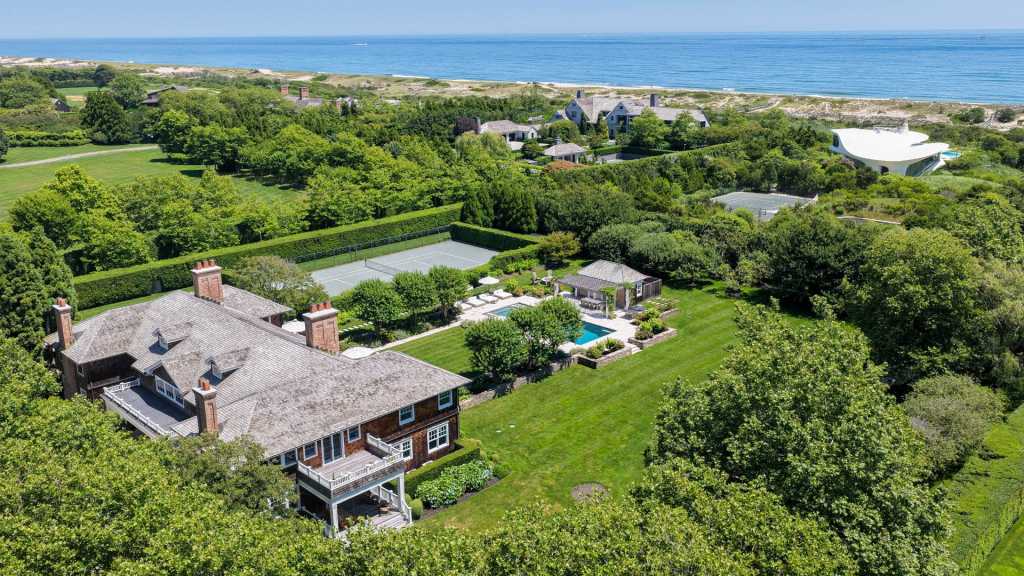
The estate section is the band of lanes running between the village core and the Atlantic, and it is the most valuable ground on the page. Lily Pond Lane is the signature address, with houses dating back to 1874, a direct path to Georgica Beach, and a walk into the village that most comparable oceanfront addresses cannot offer. Further Lane begins here and continues east into Amagansett, where the record for the highest price ever paid for a single residential parcel in the Hamptons was set in 2025. Ocean Avenue, Lee Avenue, and the smaller connecting lanes fill in the rest. Houses range from restored shingle-style estates to modern builds behind mature hedgerows, generally on one to five acres. Estate section houses regularly trade above $10 million, and oceanfront runs far higher, with much of it moving privately.
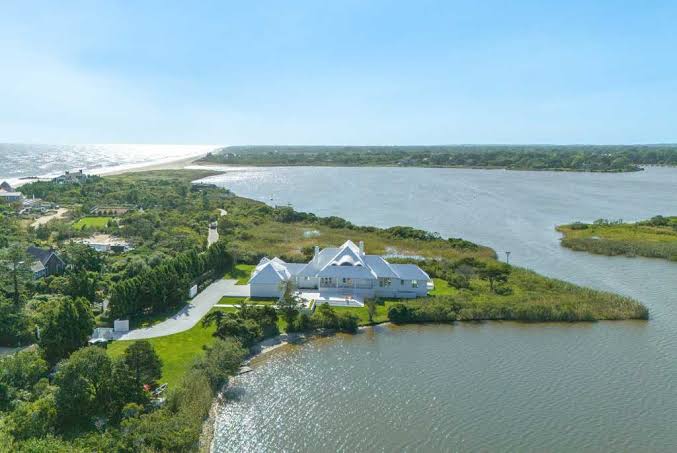
Georgica is the village's western edge and its most private pocket, built around Georgica Pond. West End Road and the lanes off it hold multi-parcel compounds with pond frontage, some with dock access, and the combination of freshwater views on one side and ocean access on the other is the specific thing buyers come here for. Worth knowing before you make an offer: the pond is common land managed by the East Hampton Town Trustees under an office dating to 1686, so what you can and cannot do at the water's edge is not purely a private matter. Recent activity here has run from roughly $10 million into the mid tens of millions, with pond-front compounds at the top and non-waterfront houses nearby lower.
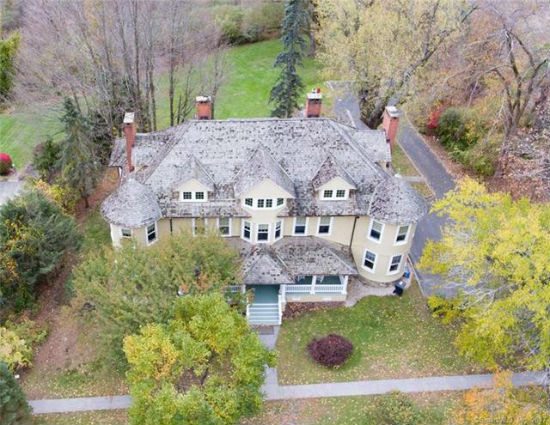
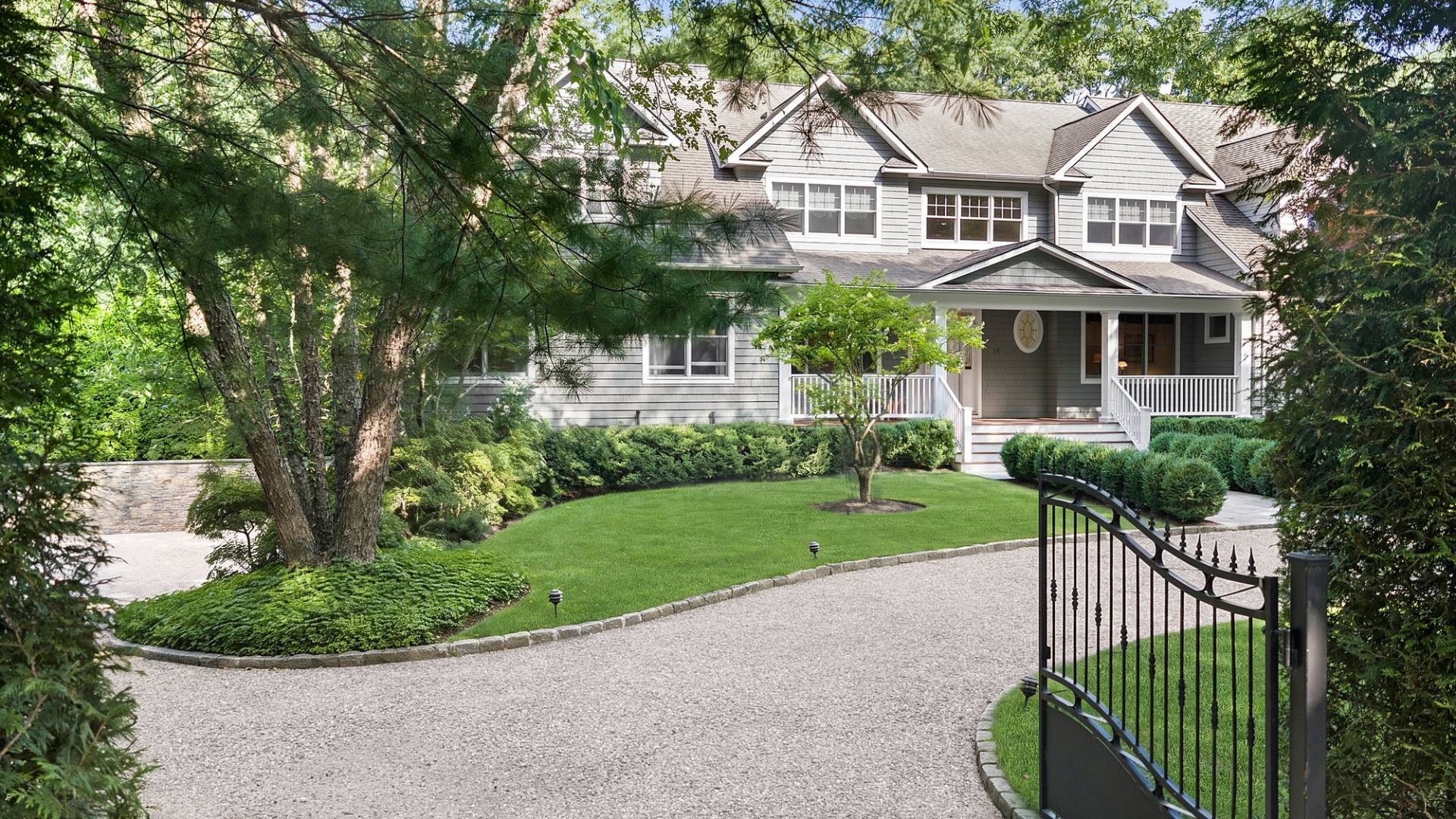
The historic core is the most walkable part of the village and the pocket where full-time residents concentrate. Along Main Street, James Lane, Huntting Lane, and the streets off Newtown Lane you will find eighteenth and nineteenth-century houses, shingle-style homes from the summer-colony era, and carefully renovated village houses on a quarter acre to about an acre. Much of this area sits inside the historic district, which means exterior changes go through architectural review, a constraint that some buyers find reassuring and others find limiting. Renovated village houses commonly run about $5 million to $9 million, with smaller houses off the main lanes lower and the largest historic properties considerably higher.

The lanes northwest of the core have quietly become the village's land play. Hither Lane, Middle Lane, Cross Highway, and the streets around them offer some of the largest remaining assemblable parcels inside village limits, which is why a pair of adjoining lots at 42 Hither Lane and 55 Middle Lane totaling more than seven acres traded at $30 million in January 2026. The existing housing stock is a mix of mid-century houses, traditional shingle homes, and recent custom builds, on lots that run from under an acre to several acres. Buyers here are typically choosing between renovating what is standing and building new. Recent activity has commonly run from about $5 million to well above $20 million where acreage is involved.
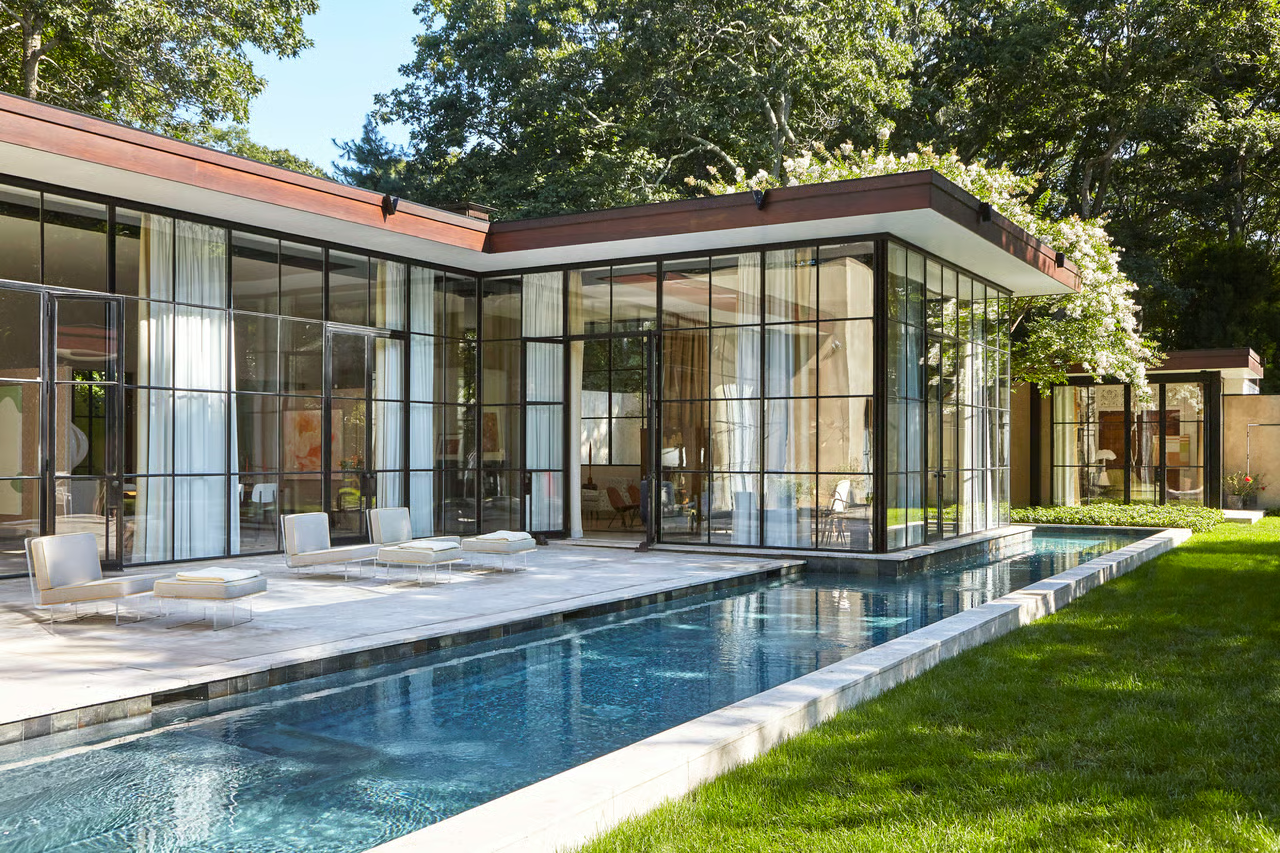
The eastern side of the village, along Egypt Lane, Dunemere Lane, and the roads toward Two Mile Hollow, is the quieter approach to ocean proximity. This is where you find the smaller village beaches, Egypt and Wiborg, along with the Maidstone Club's grounds and a housing mix of traditional shingle houses, some substantial estates, and a number of properties that trade as summer rentals before they trade as sales. It is a short bike ride to both Main Street and the sand, and it sits closest to the Amagansett line. Recent activity has commonly run from about $4 million to $15 million depending on lot size and distance to the ocean.
.jpeg)
The northern and eastern fringes of the village, around Pantigo Road, Accabonac Road, and the streets near the school campus, are the village's entry point. Housing here is smaller and more varied, including capes, ranches, and modest shingle houses on lots often under half an acre, and some of it sits just outside the village line, which changes the tax picture and the beach permit you qualify for. This is the part of the village where year-round households and working families are most concentrated, and it is the only place a buyer gets a village address materially below the estate-lane market. Recent activity has commonly run from about $2 million to $5 million. Verify the village line by address, because it matters.
Browse current East Hampton Village homes for sale, from historic houses in the walkable core to estate section properties on the ocean lanes and compounds on Georgica Pond.
.jpg)
136 North Main Street at Cedar Street, opened in 1988 and is the restaurant most associated with East Hampton. Tuscan farmhouse setting, a wood-burning oven, seasonal menus, and a dining room that fills nightly in season. Open daily from the evening; reservations are essential in summer.
on Main Street, is an inn and restaurant in a building that has operated as lodging since 1770. There is a formal dining room upstairs and a low-ceilinged tavern below, which is the better bet for a burger and a fire in winter.
on Newtown Lane, is the northern Italian standby in the middle of the shopping district, with sidewalk tables that work well for a long lunch.
on Pantigo Road, is the year-round neighborhood restaurant locals name first when asked where they actually eat, with a bar that stays busy off season.
on Newtown Lane, handles mornings with naturally leavened bread and pastry, and Springs and Northwest households treat it as the halfway stop into the village.
Shopping in East Hampton Village splits cleanly in two. Newtown Lane and Main Street carry a designer retail corridor that has grown steadily over the past decade, alongside long-standing independents, galleries, and BookHampton, with the Reutershan and Schenck lots handling parking behind the storefronts.
For provisions, the village has specialty grocers and prepared-food shops within walking distance of the core, and Amber Waves keeps a small retail shop just behind BookHampton.
Anything larger means a short drive: Bridgehampton Commons is about fifteen minutes west, and Sag Harbor Village is roughly ten minutes north for a different set of shops and restaurants.
.jpg)

The village runs five ocean beaches, and the permit system is the most important practical detail for anyone buying or renting here. Main Beach at 101 Ocean Avenue is the largest and the most social, with restrooms, a snack bar, and lifeguards from 10 a.m. to 5 p.m. in season. Georgica Beach at 219 Lily Pond Lane and Two Mile Hollow Beach at 50 Two Mile Hollow Road are also lifeguarded, and Egypt Beach and Wiborg Beach are smaller with far fewer spaces. A village beach parking permit is required from May 15 to September 15 and is separate from the Town of East Hampton permit, which is not valid at village beaches.
The permit tiers matter. Village residents receive permits at no charge. Town of East Hampton residents who live outside the village buy a village permit at a set price through a single annual in-person sale held in the winter. Non-residents buy online, with a capped number of full-season permits, a capped number of monthly permits, and daily parking available only at Main Beach Lot 2 and Two Mile Hollow through the ParkMobile app. Permits are digital, tied to a single license plate, enforced by plate scanner, and non-refundable, including if you buy the wrong type. Plan this before the season, not during it.
on Main Street has been hosting exhibitions, theater, and public programs since 1931. The summer and fall programming is consistently impressive and draws a seriously arts-literate audience.
The East Hampton Historical Society operates a cluster of sites in and around the village, including Mulford Farm, Clinton Academy, the Dominy Shops Museum, and the Thomas and Mary Nimmo Moran Home and Studio, with Home Sweet Home on James Lane and Hook Mill at t
Herrick Park sits behind the shops with playing fields and a playground project underway, and Town Pond and the burying ground at the south end of Main Street are the oldest part of the streetscape.
East Hampton Town Airport, in Wainscott just west of the village, provides regional air access
East Hampton Village addresses sit inside the East Hampton Union Free School District directly, which is a meaningful difference from several neighboring hamlets. The district runs three schools covering the full span from elementary through high school, so a village family stays inside one district for a child's entire education without relying on a tuition agreement between districts. Buyers near the village line should still verify the district by address, because the village boundary and the district boundary are not the same line.
John M. Marshall Elementary is the district's only elementary school and serves the village's youngest students, roughly ages four through eleven. It sits on the district campus off Newtown Lane, within the village, which means most village families are a short drive or a manageable walk from the elementary school. The building opened in 1961 when elementary students moved out of the shared school on Main Street, and it is named for a former elementary principal.
Middle school students continue within the district, and East Hampton High School sits at 2 Long Lane, just outside the village boundary. The high school enrolls roughly 1,030 to 1,070 students in grades 9 through 12 with a student-to-teacher ratio of about 12 to 1, competes as the Bonackers, and is the easternmost high school in New York State. It traces its lineage to Clinton Academy, chartered in 1784 and still standing on Main Street in the village. A major expansion was completed in 2010. Because the high school also educates students from Wainscott, Springs, Amagansett, and Montauk under tuition contracts, a village student's class is drawn from across the whole town.
The independent options are close and unusually strong for a community this size. The Ross School's Upper School occupies a campus on Goodfriend Drive just outside the village, serving grades 7 through 12 plus a postgraduate year, with its Lower School on a farmland campus in Bridgehampton. The Hayground School in Bridgehampton is a small progressive school. For higher education, Stony Brook University maintains its Southampton campus about half an hour west, and Suffolk County Community College's Eastern Campus is in Riverhead.
Approximately 1,517 year-round (2020 Census, Incorporated Village of East Hampton); summer population is many times higher
Approximately 4.8 square miles of land within a 4.9 square mile village
Founded 1648; incorporated as a village in 1920
11937 (shared with much of the surrounding Town of East Hampton)
Incorporated Village of East Hampton, within the Town of East Hampton. The village has its own mayor and board, police department, zoning and architectural review, and a village tax in addition to town and county taxes
Approximately $5.625 million (William Raveis, 2025 year-end), the highest of any South Fork market the brokerage tracks
Seven in 2025, tied with Bridgehampton for the most on the South Fork
Five: Main, Georgica, Two Mile Hollow, Egypt, and Wiborg. A village permit is required from May 15 to September 15 and the Town permit is not valid
East Hampton Union Free School District: John M. Marshall Elementary, East Hampton Middle School, East Hampton High School
East Hampton station on the LIRR Montauk Branch; Hampton Jitney service; East Hampton Town Airport in Wainscott; Montauk Highway, Route 27, is the through road
The East Hampton Village median sale price was approximately $5.625 million in recorded sales data for 2025, the highest of any market tracked on the South Fork and well above a regional median that crossed $2 million for the first time that year. The village also recorded seven sales above $20 million in 2025. The range within the village is wide: houses on the northern and eastern fringes commonly run about $2 million to $5 million, renovated houses in the walkable historic core about $5 million to $9 million, and estate section properties regularly above $10 million, with oceanfront far higher. Because the village records relatively few sales, always check the period and the source behind any median you are quoted.
East Hampton Village is an incorporated village with its own government; East Hampton also refers to the much larger Town of East Hampton that surrounds it. The village covers about 4.8 square miles and has its own mayor and board, police department, zoning code, architectural review board, and beach permit system, and village property owners pay a village tax on top of town and county taxes. The Town of East Hampton also includes Amagansett, Montauk, Wainscott, Springs, and Northwest Woods, none of which are in the village. This matters practically, because a home with an 11937 mailing address is not necessarily a village address, and the village line determines your taxes, whether exterior renovations go through architectural review, and which beach permit you qualify for.
The village runs five ocean beaches: Main Beach at 101 Ocean Avenue, Georgica Beach at 219 Lily Pond Lane, Two Mile Hollow Beach at 50 Two Mile Hollow Road, Egypt Beach, and Wiborg Beach. Main, Georgica, and Two Mile Hollow are lifeguarded in season, and Main Beach has restrooms and a snack bar. A village beach parking permit is required from May 15 to September 15, and the Town of East Hampton permit is not valid at village beaches. Village residents receive permits at no charge, Town of East Hampton residents living outside the village buy a village permit through a single annual in-person winter sale, and non-residents buy online with capped season and monthly permits plus daily parking at Main Beach Lot 2 and Two Mile Hollow through the ParkMobile app. Permits are digital, linked to one license plate, and non-refundable.
It depends on whether you are buying for the ocean, the walk, or the land. The estate section, along Lily Pond Lane, Further Lane, Ocean Avenue, and the connecting lanes, holds the most valuable ground and the shortest walk from serious oceanfront into a real village. Georgica, on the western edge around Georgica Pond, is the most private, with multi-parcel compounds and freshwater frontage. The historic core along Main Street, James Lane, and the streets off Newtown Lane is the most walkable and where full-time residents concentrate. Hither Lane and Middle Lane hold the largest remaining assemblable parcels. The eastern lanes near Egypt and Wiborg beaches are quieter, and the northern and eastern fringes near Pantigo Road are the village's entry point.
Village addresses sit inside the East Hampton Union Free School District directly, which runs John M. Marshall Elementary, East Hampton Middle School, and East Hampton High School. That means a village family stays in one district from elementary through graduation without depending on a tuition agreement between districts, which is how several neighboring hamlets including Amagansett and Wainscott handle their older students. East Hampton High School sits at 2 Long Lane just outside the village boundary, enrolls roughly 1,030 to 1,070 students in grades 9 through 12 with a student-to-teacher ratio of about 12 to 1, and traces its lineage to Clinton Academy, which still stands on Main Street. Independent options nearby include the Ross School Upper School on Goodfriend Drive. Verify the district by address, since the village line and the district line differ.
The village has standing architecture from the seventeenth century forward, which is unusual at this price point. In the historic core you will find eighteenth and nineteenth-century houses, saltboxes, and shingle-style homes from the summer-colony era that followed the railroad's arrival in 1895, many of them inside the historic district and subject to architectural review for exterior work. The estate lanes hold restored shingle-style estates and modern houses behind mature hedgerows on one to five acres, with the oldest houses on Lily Pond Lane dating to 1874. Georgica adds pond-front compounds. The fringes have capes, ranches, and smaller shingle houses. Village code limits how large a house can be on a given lot, which is a large part of why the streetscape has held its scale.
The CeeJackTeam is a long-established Hamptons partnership rather than a single agent, and in a village where much of the best inventory never reaches a public listing, that established network is the practical difference. Cee Scott Brown and Jack Pearson, with Partner Agent Denise Wilder, bring over 60 years of combined experience and over $1.5 billion in sales volume, have been named Top Producer 13 years in a row, and have held a place on the Top Producer Presidents Council for 10 of those years. Since joining Compass in 2020 the team has closed 425+ deals from Westhampton to Montauk. Cee came out of two decades in the New York art world and Jack out of a senior career in luxury fashion retail, which is directly relevant in a market where a listing may be a protected historic house or an architecturally significant modern build. The team also works from the Compass office in East Hampton, so there is someone working this market from close by rather than driving in for showings. The team also runs a dedicated rental operation, which is how a great many village buyers begin.

Buying in East Hampton Village means understanding the village line, the review process, and the inventory that never gets advertised, and the CeeJackTeam has been working the East End since 2006. For buyers, we will tell you what the village code actually allows before you fall in love with a plan. For sellers, we will position your house against what has closed in the village rather than against a town-wide median that understates it. Call 516-457-7111 or email ceejackteam@compass.com to talk it through.