Email
ceejackteam@compass.com
Call
(516) 457-7111
Named for a grist mill that started grinding in 1644, and still the quietest way into the Hamptons' top tier.
Water Mill is a hamlet of roughly 2,500 year-round residents in the Town of Southampton, sitting between Southampton Village to the west and Bridgehampton to the east, and it is named after an actual working mill. Edward Howell, a miller from Lynn, Massachusetts who arrived with the 1640 colonists and became the settlement's magistrate and wealthiest citizen, persuaded the town to give him about forty acres on a hundred-acre pond three miles east of the village, along with labor and money, and the mill was probably grinding wheat, oats, and corn by 1644. It still stands as the Water Mill Museum, on the National Register since 1983. Anyone looking at Water Mill homes for sale is buying into a hamlet that spent three centuries as farm and dairy country and then, quietly, became one of the most expensive addresses on the East End.
The market here is unusually hard to summarize, and it is worth understanding why before anyone quotes you a median. The brokerage report that the local industry treats as authoritative does not break Water Mill out at all: it reports a combined market with Bridgehampton and Sagaponack, which came in at a median of $5,100,000 on 171 sales in 2025. The consumer portals do publish Water Mill figures, and they disagree wildly, ranging from roughly $3.7 million as an index value to about $5.5 million as a median sold price in mid-2026, with one tracker reporting a 307 percent year-over-year jump off a total of five recorded sales. Neither problem is a sign of a weak market. Both are symptoms of a small hamlet where a handful of very large waterfront trades dominate the arithmetic.
Those trades are the real story. Jule Pond, a forty-two acre estate with three sides of water and views across both Mecox Bay and the Atlantic, sold for $105 million in August 2021, which was then the highest price ever paid for a single Hamptons property, a record it held until an Amagansett oceanfront parcel passed it in 2025. Four adjoining Cobb Road parcels on Mecox Bay traded together for $118.5 million the same year, and that compound later came back to market. More recently a modern house on 2.86 acres at 951 Flying Point Road, looking out over Channel Pond, Mecox Bay, and the ocean, sold at $22.5 million, and a bay-cove property on Bay Lane closed at $12.6 million. What all of them share is water on more than one side, which is the thing Water Mill has in unusual supply.
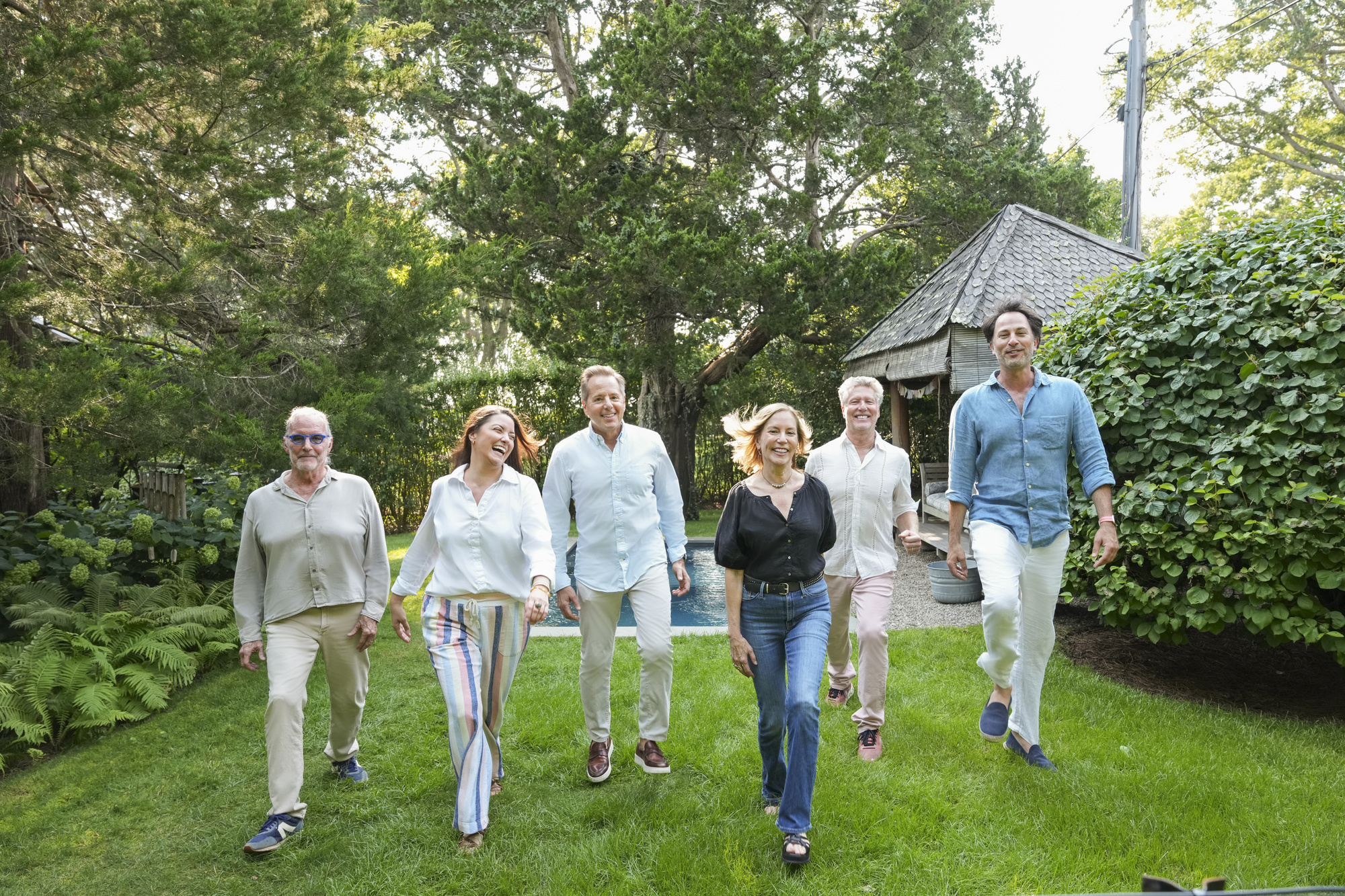
Behind that waterfront is the part most buyers actually purchase: farm country. Fields still run south from Montauk Highway toward the bay, working operations including Mecox Bay Dairy and Seven Ponds Orchard are still in business, and much of the open land is protected. The CeeJackTeam has worked the East End since 2006. Cee Scott Brown and Jack Pearson, with Partner Agent Denise Wilder, bring over 60 years of combined experience and over $1.5 billion in sales volume, and have been named Top Producer 13 years in a row, with a place on the Top Producer Presidents Council for 10 of those years. Since joining Compass in 2020 the team has closed 425+ deals from Westhampton to Montauk. The office at 84 Main Street in Sag Harbor is about fifteen minutes north. Whether you are weighing bayfront, a reserve-front parcel, or a house in the woods north of the highway, the first useful step is understanding what the numbers here actually measure. Responsive, respectful, real.
The hamlet is named for a water-powered grist mill built by Edward Howell, one of Southampton's original settlers, and probably grinding by 1644. It was moved south in 1726 and again in 1790, milled grain and later made paper and processed wool, stored ice from Mill Pond by the early 1900s, and was restored by the Ladies Auxiliary of Water Mill. It now operates as the Water Mill Museum at 41 Old Mill Road, on the National Register since 1983.
A Mill That Has Been Here Since 1644.
The hamlet is named for a water-powered grist mill built by Edward Howell, one of Southampton's original settlers, and probably grinding by 1644. It was moved south in 1726 and again in 1790, milled grain and later made paper and processed wool, stored ice from Mill Pond by the early 1900s, and was restored by the Ladies Auxiliary of Water Mill. It now operates as the Water Mill Museum at 41 Old Mill Road, on the National Register since 1983.
Next to the water mill on the village green stands the Corwith Windmill, built in Sag Harbor in 1800 and moved here in 1814 by the miller James Corwith. It is the smallest and second-oldest of the eleven surviving South Fork windmills. Two working-era mills of different kinds, a few steps apart, is not something any other Hamptons hamlet can show you.
The Only Hamlet With Both a Mill and a Windmill on the Green.
Next to the water mill on the village green stands the Corwith Windmill, built in Sag Harbor in 1800 and moved here in 1814 by the miller James Corwith. It is the smallest and second-oldest of the eleven surviving South Fork windmills. Two working-era mills of different kinds, a few steps apart, is not something any other Hamptons hamlet can show you.
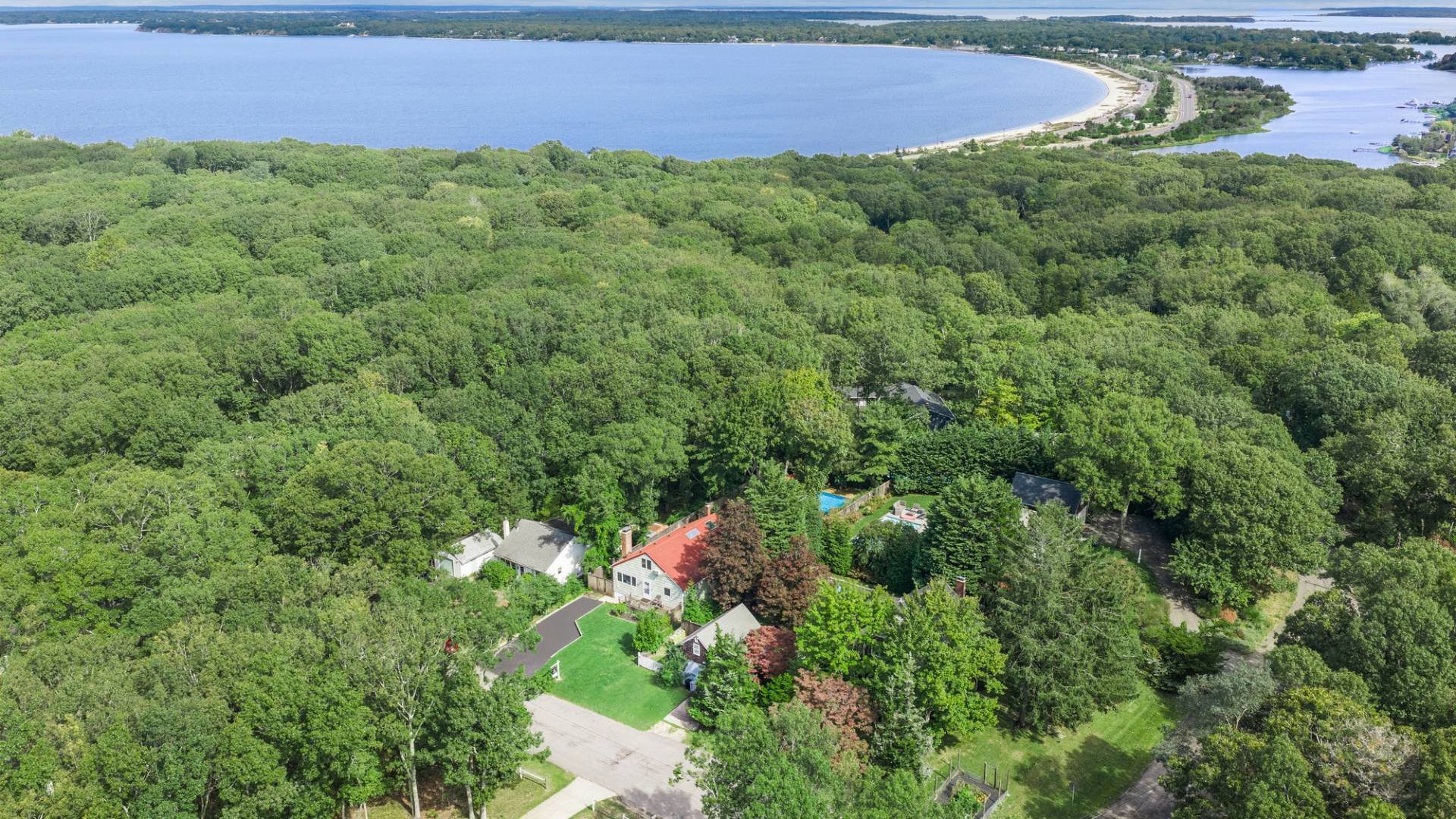
Mecox Bay forms the hamlet's southern edge, with Channel Pond, Mill Pond, and Burnett Creek behind it and the Atlantic beyond, which is why so many properties here hold frontage on two bodies of water at once. Flying Point Beach at 1055 Flying Point Road, known locally as The Cut, is where the bay opens through to the ocean and the tidal pools form.
Water on More Than One Side.
Mecox Bay forms the hamlet's southern edge, with Channel Pond, Mill Pond, and Burnett Creek behind it and the Atlantic beyond, which is why so many properties here hold frontage on two bodies of water at once. Flying Point Beach at 1055 Flying Point Road, known locally as The Cut, is where the bay opens through to the ocean and the tidal pools form.
The Parrish moved from Southampton Village to a Herzog and de Meuron-designed building at 279 Montauk Highway in 2012. It holds more than 3,000 works, the largest public collection of William Merritt Chase anywhere, and the Fairfield Porter archive, and it runs a full year-round exhibition and events calendar. For a hamlet of 2,500 people, having a museum of that scale on the highway is remarkable.
The Parrish Art Museum.
The Parrish moved from Southampton Village to a Herzog and de Meuron-designed building at 279 Montauk Highway in 2012. It holds more than 3,000 works, the largest public collection of William Merritt Chase anywhere, and the Fairfield Porter archive, and it runs a full year-round exhibition and events calendar. For a hamlet of 2,500 people, having a museum of that scale on the highway is remarkable.
Founded in 1992 by the theater director Robert Wilson and opened in 2006 in a converted Western Union research facility on Watermill Towd Road, the Watermill Center is an international residency program for artists and thinkers, with a substantial art and artifact collection and an annual summer benefit that anchors the East End charity calendar.
The Watermill Center.
Founded in 1992 by the theater director Robert Wilson and opened in 2006 in a converted Western Union research facility on Watermill Towd Road, the Watermill Center is an international residency program for artists and thinkers, with a substantial art and artifact collection and an annual summer benefit that anchors the East End charity calendar.
Fields still run from the highway down toward the bay, Mecox Bay Dairy makes cheese here, Seven Ponds Orchard and Hank's Pumpkintown draw crowds in autumn, and Duck Walk Vineyards pours on Montauk Highway. In hard winters the older tradition returns: ice boating on Mecox Bay dates to 1836, when two local men built their own boat, and locals still skate on Mill Pond.
Farming and Ice Boating Are Both Still Going.
Fields still run from the highway down toward the bay, Mecox Bay Dairy makes cheese here, Seven Ponds Orchard and Hank's Pumpkintown draw crowds in autumn, and Duck Walk Vineyards pours on Montauk Highway. In hard winters the older tradition returns: ice boating on Mecox Bay dates to 1836, when two local men built their own boat, and locals still skate on Mill Pond.

Water Mill South is the premium designation in this hamlet and one of the strongest in the Hamptons. The lanes running down toward Mecox Bay, including Cobb Road, Cobb Isle Road, Bay Lane, Rose Hill Road, and Halsey Lane, hold estates on multiple acres with bay frontage, private docks, and in many cases views across the bay to the Atlantic beyond. This is where the hamlet's largest trades happen: four adjoining Cobb Road parcels sold together for a reported $118.5 million in 2021, and a bay-cove property on Bay Lane closed at $12.6 million more recently. The architecture runs from shingled traditionals to significant modern houses by named architects. Dock rights and any Town Trustees jurisdiction should be confirmed property by property rather than assumed from water frontage.

Flying Point Road runs south from the highway to the beach, and the properties along its lower reach are the hamlet's oceanfront and its most valuable ground. Jule Pond, a forty-two acre estate on Jule Pond Drive with three sides of waterfront, sold for $105 million in August 2021 and was then the highest price ever paid for a single Hamptons property. A modern house on 2.86 acres at 951 Flying Point Road, with views over Channel Pond, Mecox Bay, and the ocean, sold at $22.5 million. Flying Point Beach itself, at 1055 Flying Point Road, is a Town of Southampton beach and is where Mecox Bay cuts through to the Atlantic. Properties here typically combine ocean and pond or bay frontage, which is the specific reason they command what they do, and much of what trades at this level moves privately.

The stretch along Montauk Highway is Water Mill's civic and commercial spine, such as it is, and the housing immediately around it is the hamlet's most attainable. The village green with the mill and the Corwith Windmill sits here, along with the Water Mill Community House, the Parrish Art Museum, Duck Walk Vineyards, and the small commercial cluster at Water Mill Square. Houses in this belt are a mix of older village-scale properties, mid-century houses, cottages, and newer construction on lots generally under two acres. What you get is the ability to walk to the mill, the museum, and a coffee, which almost nobody buying in Water Mill actually does but which matters more than people expect in February.
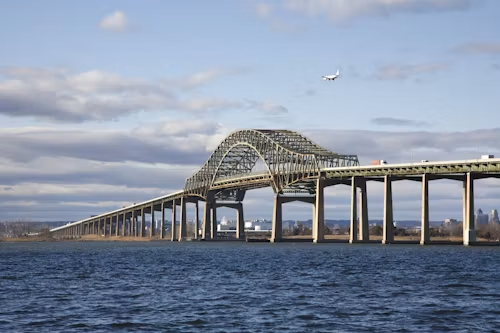
North of Montauk Highway the hamlet turns wooded and considerably larger-lotted, running up toward Scuttle Hole Road, Head of Pond Road, Deerfield Road, Edge of Woods Road, and the Seven Ponds area. This is where Water Mill still looks like farm and woodland country: reserves, agricultural parcels, horse properties, and houses set well back on two to ten acres or more, some with reserve frontage that will never be built on. Prices here are a fraction of Water Mill South while keeping the same address, and the compensation for losing the bay is privacy, acreage, and a short drive to Sag Harbor as well as to the ocean. Buyers who want land rather than water frontage generally end up here.

Southampton Village is immediately west, with the deepest estate inventory in the Hamptons and its own village government, taxes, and beaches. Bridgehampton is immediately east and shares both Mecox Bay and the farm belt with Water Mill, which is why the two are reported together in market data. Sagaponack lies beyond Bridgehampton and is grouped with them in the same reporting. Sag Harbor is about fifteen minutes north across the fork, a harbor village with a walkable Main Street. Each has a full guide on this site, and the Southampton page covers the wider town.
Browse current Water Mill homes for sale, from wooded acreage north of the highway to bayfront estates in Water Mill South and oceanfront on Flying Point Road.
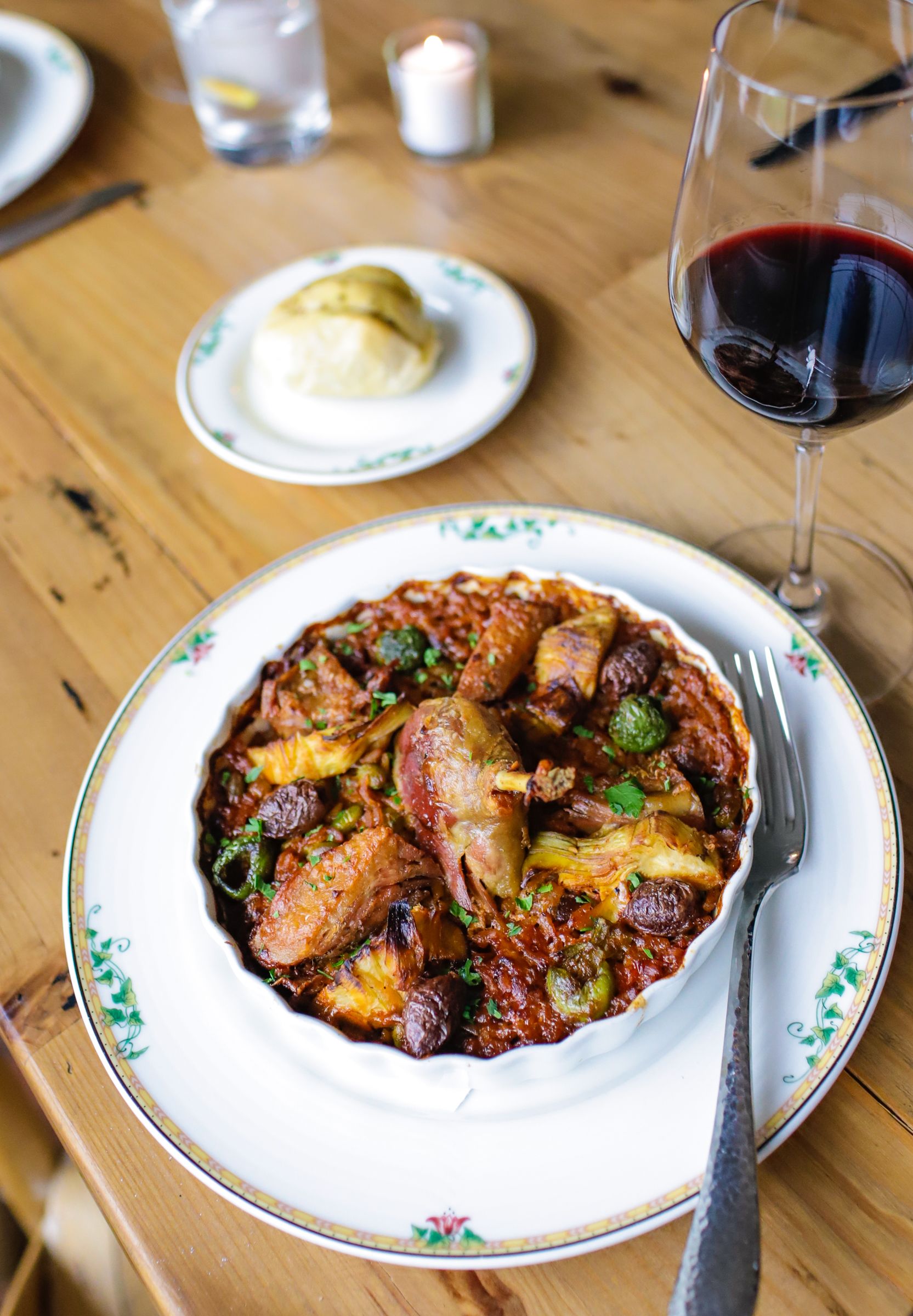
on Montauk Highway brings the energy of a Greek island to the Hamptons. The whitewashed interior, open-air dining, and wood-fired menu make it one of the most visually striking and satisfying restaurants in the area. The whole branzino and the lamb chops have their own local fan clubs.
A nearby dining and retail destination with a wide selection of restaurants, about 10 minutes west.
A walkable village with one of the East End’s broadest year-round dining selections, about 15 minutes away.
A nearby dining destination with a strong selection of restaurants, just minutes west of Sagaponack.
A local dairy producing cheese from its own herd in Water Mill.
A seasonal farm destination offering locally grown fruit and cider.
For a full supermarket run and national retail, Bridgehampton Commons is about twenty minutes west.
The Hamptons’ largest retail area, located about 10 minutes west of Water Mill.
A local vineyard where visitors can taste and purchase wine and take tours.

.jpg)
is the main event outdoors. Kayaking, fishing, picnicking, and sand volleyball fill the summer days here, and the beach is well-maintained year-round.
The center of Water Mill’s outdoor life, offering paddling, small-boat sailing, fishing, and seasonal ice boating.
A historic local waterway where skating can take place during particularly cold winters.
A community park with playing fields and a playground for outdoor recreation.
A private golf club located a short drive east in Bridgehampton.
Private golf options located west of Water Mill near Southampton.
A popular autumn destination featuring a corn maze and hayrides, especially suited to families.
on Montauk Highway holds over 3,000 works and runs more than 100 public workshops and classes every year. The building itself, designed by Herzog and de Meuron, is worth visiting on its own. It is a genuine cultural institution that sits comfortably among the best small museums in New York State.
An international artist residency and cultural center founded by theater director Robert Wilson, hosting artists and major events.
on Old Mill Road is built around the restored 1664 watermill, one of the oldest and most intact historical structures in the Hamptons. Rotating art exhibitions and community events make it worth returning to throughout the season.
A historic windmill built in Sag Harbor in 1800 and moved to Water Mill in 1814.
The hamlet’s civic gathering space located on Montauk Highway.
School district assignment is the single most important thing to check before buying in Water Mill, because the hamlet is not served by one district. Water Mill sits between the Southampton and Bridgehampton school districts, and which one a given address falls into depends on where in the hamlet it is rather than on the mailing address. Two houses on the same road can be zoned differently. Anyone buying here with children, or thinking about resale to a family, should verify the district for the specific address with the districts themselves before relying on it.
The Southampton Union Free School District runs three schools covering elementary through high school, with roughly 1,270 to 1,330 students district-wide and a student-to-teacher ratio of about 8 to 1, based in and around Southampton Village to the west. The Bridgehampton Union Free School District runs a single school covering prekindergarten through grade 12 in one building on Montauk Highway to the east, with roughly 200 students, one of the lowest student-to-teacher ratios in New York State, and high school classes small enough to count on your fingers. Those are two genuinely different educational propositions, and in Water Mill the difference can come down to which side of a property line you are on.
Independent options sit close on both sides. The Ross School's Lower School occupies a farmland campus on Butter Lane in Bridgehampton, minutes east, with its Upper School in East Hampton for grades 7 through 12 plus a postgraduate year. The Hayground School, also in Bridgehampton, is a small progressive school. Our Lady of the Hamptons Regional Catholic School is in Southampton Village to the west. For higher education, Stony Brook University maintains its Southampton campus about fifteen minutes west, and Suffolk County Community College's Eastern Campus is in Riverhead.
Approximately 12.8 square miles including a significant amount of water, chiefly Mecox Bay
An unincorporated hamlet in the Town of Southampton. There is no village government and no separate village tax, but the Town's Peconic Bay transfer tax applies to purchases
Water Mill is not reported separately in the main brokerage market report; it is grouped with Bridgehampton and Sagaponack, a combined market with a median of $5,100,000 on 171 sales in 2025
A water-powered grist mill built by Edward Howell and probably grinding by 1644; the mill still stands as the Water Mill Museum, on the National Register since 1983
Jule Pond, 42 acres with three sides of waterfront, sold for $105 million in 2021, then the highest price ever paid for a single Hamptons property; four adjoining Cobb Road parcels traded for a reported $118.5 million the same year
Approximately 2,506 year-round (2020 Census, Water Mill CDP); summer population is far higher
Consumer sites reported Water Mill medians and index values between roughly $3.7 million and $5.5 million in mid-2026, off very small sale counts. Treat any single figure with caution
Split between the Southampton and Bridgehampton school districts depending on address.
No LIRR station in Water Mill; the nearest are Southampton and Bridgehampton on the Montauk Branch. Hampton Jitney serves the highway; Montauk Highway is the through road
11976
There is no single reliable published median for Water Mill, and that is worth knowing before anyone quotes you one. The brokerage report the local industry treats as authoritative does not break the hamlet out; it reports a combined market with Bridgehampton and Sagaponack that came to a median of $5,100,000 on 171 sales in 2025. Consumer portals do publish Water Mill figures and they disagree sharply, ranging from about $3.7 million as an index value to roughly $5.5 million as a median sold price in mid-2026, with one tracker showing a 307 percent year-over-year change off five total sales. The honest answer is that Water Mill is a small hamlet where a handful of large waterfront trades dominate the arithmetic, so ask for recent comparable sales in the specific pocket you are looking at rather than a hamlet-wide median. We can pull those.
Water on more than one side, mostly. Mecox Bay forms the hamlet's southern edge with the Atlantic just beyond it, and Channel Pond, Mill Pond, and Burnett Creek sit behind that, so a great many Water Mill South properties hold frontage on two bodies of water at once, often with a private dock on the bay and an ocean view over it. That combination is rare even in the Hamptons. The public record shows what it commands: Jule Pond, forty-two acres with three sides of waterfront, sold for $105 million in 2021, then the highest price ever paid for a single Hamptons property, and four adjoining Cobb Road parcels on Mecox Bay traded together for a reported $118.5 million the same year. North of Montauk Highway the same address costs a fraction of that.
Water Mill South is the local designation for the part of the hamlet south of Montauk Highway, running down toward Mecox Bay and the ocean, and it is the premium market here. The lanes in it include Cobb Road, Cobb Isle Road, Bay Lane, Rose Hill Road, Halsey Lane, and Flying Point Road, and the properties are generally estates on multiple acres with bay frontage, dock potential, and in many cases ocean views across the bay. Architecture ranges from shingled traditionals to significant modern houses. North of the highway, by contrast, is wooded and larger-lotted, with reserves, agricultural parcels, and houses set well back on two to ten acres or more at considerably lower prices. In Water Mill, which side of the highway you are on is the first question that matters.
Water Mill is not served by a single school district, which is the most important practical thing to know here. The hamlet sits between the Southampton and Bridgehampton districts and which one an address falls into depends on where in Water Mill it is, not on the mailing address, so two houses on the same road can be zoned differently. Southampton Union Free School District runs three schools covering elementary through high school with roughly 1,270 to 1,330 students. Bridgehampton Union Free School District runs a single school covering prekindergarten through grade 12 in one building with roughly 200 students and one of the lowest student-to-teacher ratios in the state. Those are two very different propositions, so verify the district for a specific address with the districts before relying on it.
Yes. Flying Point Beach, at 1055 Flying Point Road, is Water Mill's ocean beach and is where Mecox Bay cuts through to the Atlantic, which is why locals call it The Cut and why the tidal pools there are a fixture of family summers. It is a Town of Southampton beach, so a Town beach parking permit is required in season, with resident and non-resident options, and the Town permit is not valid at Southampton Village beaches such as Cooper's, which run on a separate village permit. No permit is needed to arrive on foot or by bicycle. Mecox Beach and W. Scott Cameron Beach are also Town beaches a short drive east, but both sit in Bridgehampton rather than Water Mill.
More than the size of the hamlet suggests. The Parrish Art Museum on Montauk Highway holds over 3,000 works, including the largest public collection of William Merritt Chase, and runs a year-round exhibition and events calendar out of its Herzog and de Meuron building. The Watermill Center on Watermill Towd Road runs an international artist residency. The Water Mill Museum is the 1644 mill itself, restored and working, with the Corwith Windmill of 1800 standing beside it on the green. Calissa and Duck Walk Vineyards handle dinner and an afternoon, Mecox Bay Dairy and Seven Ponds Orchard cover provisions, and Hank's Pumpkintown owns the autumn. In hard winters the bay freezes and the ice boats come out, a Water Mill tradition dating to 1836. For anything more, Southampton Village is ten minutes west and Sag Harbor fifteen minutes north.
In a hamlet where the published medians contradict each other, what a buyer or seller needs is someone who works from actual comparables rather than headline figures, and who transacts on both sides of the highway. The CeeJackTeam has worked the East End since 2006. Cee Scott Brown and Jack Pearson, with Partner Agent Denise Wilder, bring over 60 years of combined experience and over $1.5 billion in sales volume, have been named Top Producer 13 years in a row, and have held a place on the Top Producer Presidents Council for 10 of those years. Since joining Compass in 2020 the team has closed 425+ deals from Westhampton to Montauk, which takes in Water Mill and everything either side of it. Cee came out of two decades in the New York art world and Jack out of luxury fashion retail, useful in a hamlet with two serious art institutions and a housing stock that runs from 1700s farmhouses to architect-designed modern. The team also works from the Compass offices in Bridgehampton and Southampton, either side of the hamlet, so there is someone close by rather than driving in for showings. The team also runs a dedicated rental operation.

Water Mill rewards precision. Which side of the highway you buy on, which school district the address actually falls in, whether bay frontage comes with a dock, and what has genuinely sold nearby rather than what a portal reports are all questions with real answers, and they are not the same answers across the hamlet. The CeeJackTeam has worked the East End since 2006, from wooded acreage north of Montauk Highway to bayfront in Water Mill South and oceanfront on Flying Point Road. For buyers, we will pull the comparables that matter instead of quoting a median that does not. For sellers, we will position your house against what has closed on your side of the road. Call 516-457-7111 or email ceejackteam@compass.com to talk it through.