Email
ceejackteam@compass.com
Call
(516) 457-7111
An incorporated village of 1.8 square miles on Sag Harbor Bay, in two towns at once, and walkable in a way nowhere else in the Hamptons is.
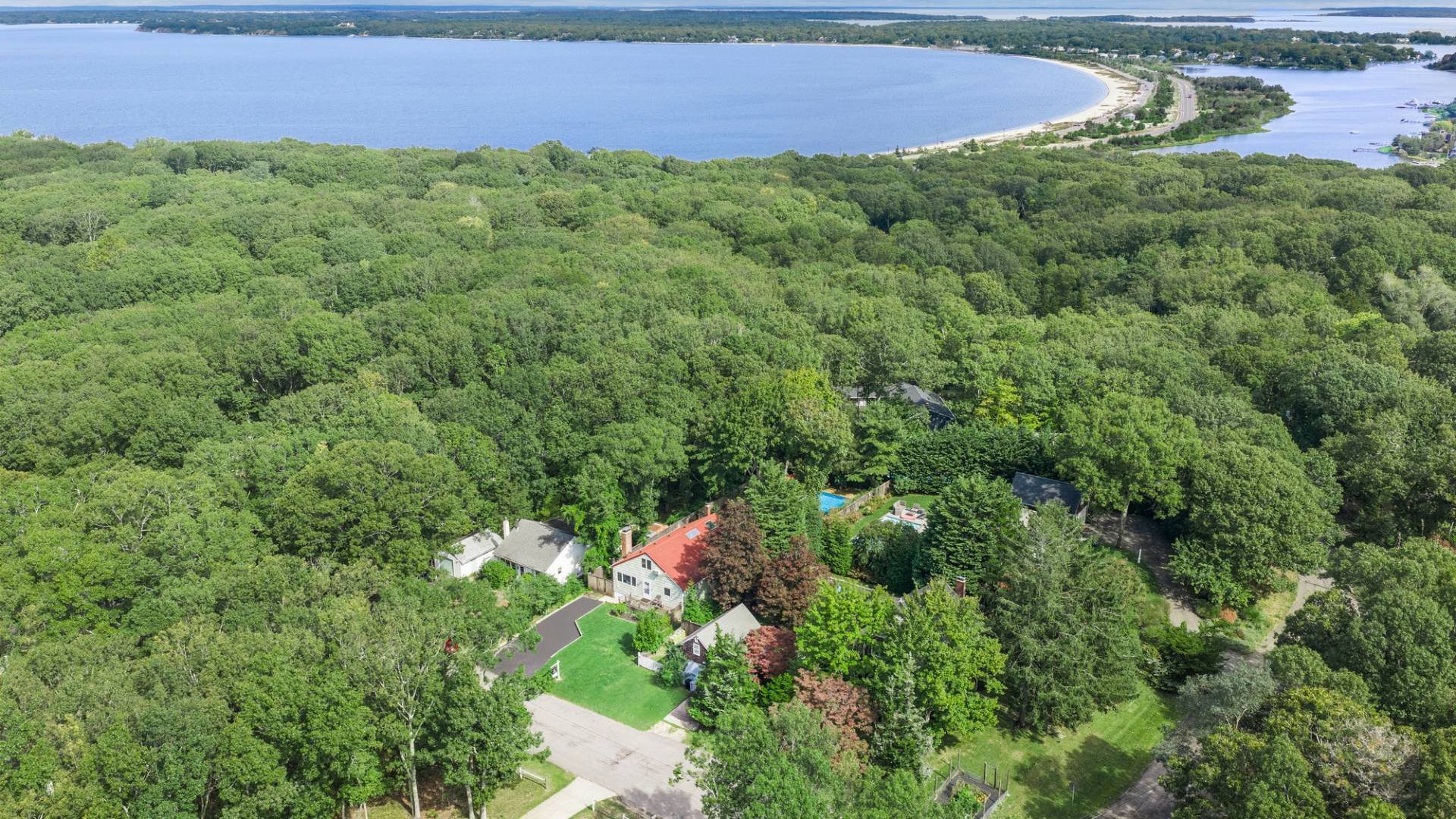
Sag Harbor Village is an incorporated village of roughly 2,770 year-round residents on Sag Harbor Bay, and it is the only village in the Hamptons that sits inside two towns at the same time. Division Street is the line: the larger share lies in the Town of Southampton and the remainder in the Town of East Hampton. It was settled in the early eighteenth century, named a United States port of entry by Congress in 1789, incorporated on March 26, 1846, and became one of the great whaling ports of the nineteenth century. Anyone comparing Sag Harbor Village homes for sale is buying into that inheritance literally, because the entire business district is a National Register historic district and the housing stock runs continuously from the mid-1700s to the present, mostly on parcels under half an acre.
The numbers say the demand is real and recent. No Hamptons village is wanted harder right now than this one. Recorded sales data for 2025 shows 79 sales inside the village at a median of $2,650,000, up more than 20 percent year over year, with the number of closings up 46 percent, the largest such increase of any of the twelve markets the brokerage tracks, and total dollars changing hands up 86 percent. One trade cleared $20 million. For comparison, the wider Sag Harbor area, which in that report takes in Noyac and North Haven, recorded 137 sales at a median of $2,160,759, so the village carries roughly half a million dollars of premium over its own surroundings. Set against East Hampton Village at $5,625,000 or Southampton Village at $4,337,500, the picture is clear: Sag Harbor Village is where demand has been accelerating fastest while still costing around half what the estate villages cost.
What that buys is a village that works in February. Main Street runs from the harbor past the Whaling Museum, the American Hotel, Bay Street Theater, the rebuilt Sag Harbor Cinema, and the John Jermain Memorial Library, and enough of it stays open year-round to sustain a permanent population, which is not true of most of the East End. Add roughly 3.3 miles of shoreline, about 240 acres of village parkland including Havens Beach and Mashashimuet Park, a school district with an International Baccalaureate program, and a condominium community inside a nineteenth-century factory, and you have the only Hamptons village where a buyer can reasonably plan to live without a car. What you give up is ocean beaches, which are a fifteen-minute drive south.
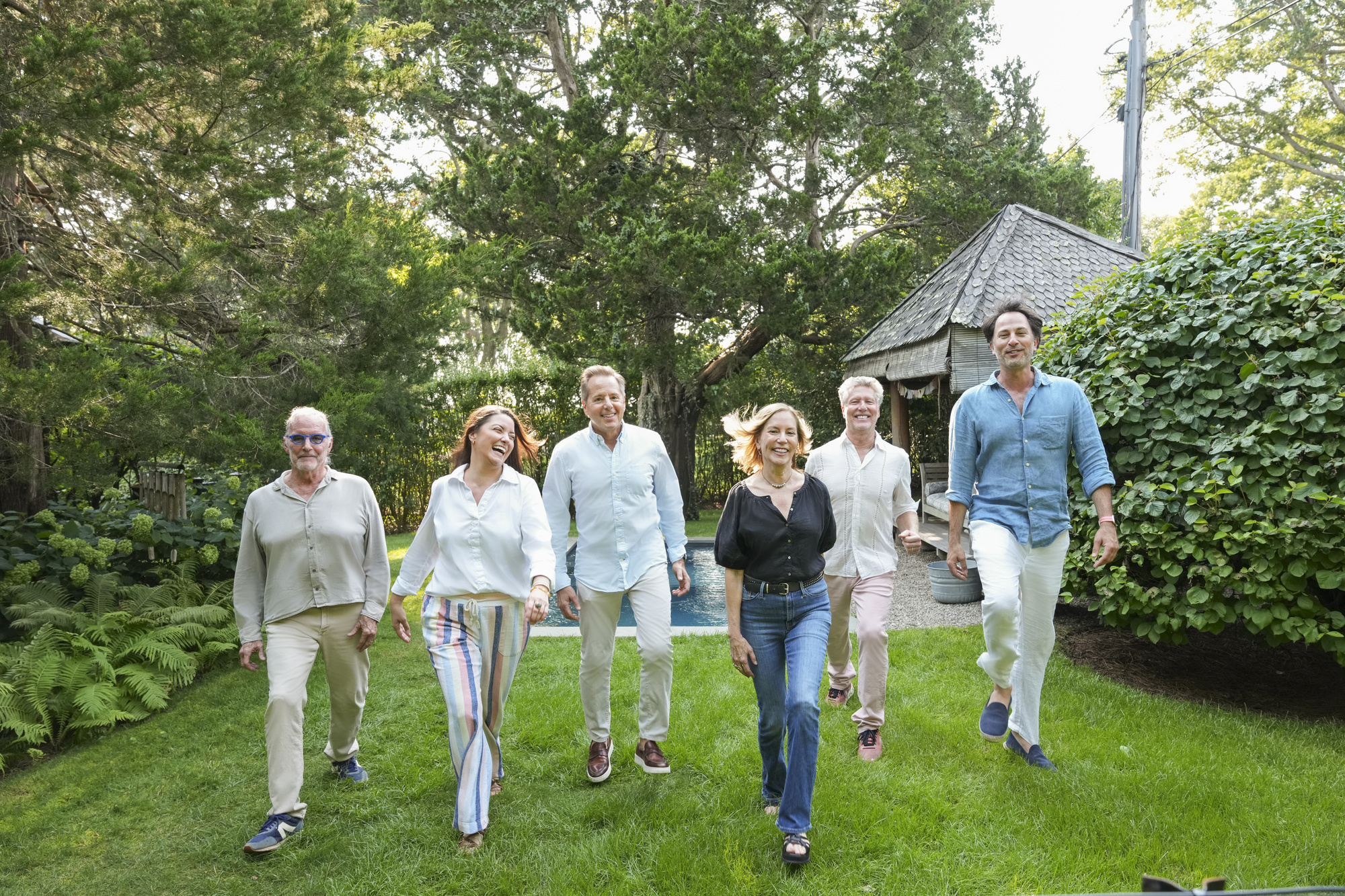
This is the CeeJackTeam's home village. The office is at 84 Main Street, a block from the harbor, and the team has worked the East End since 2006. Cee Scott Brown and Jack Pearson, with Partner Agent Denise Wilder, bring over 60 years of combined experience and over $1.5 billion in sales volume, and have been named Top Producer 13 years in a row, with a place on the Top Producer Presidents Council for 10 of those years. Since joining Compass in 2020 the team has closed 425+ deals from Westhampton to Montauk. The team has also sold condominiums inside the Watchcase Factory since the building was completed, which in a village where that single address functions as its own submarket is a specialty rather than a footnote. Cee came out of two decades in the New York art world and Jack out of luxury fashion retail, which suits a village of protected historic houses and a serious arts calendar. Responsive, respectful, real.
Main Street, Madison Street, and the blocks around them put groceries, restaurants, a cinema, a professional theater, the library, and the post office within a walk of most village addresses, on parcels typically under half an acre. Very little of the rest of the East End is genuinely walkable, and none of it is walkable in January the way this is.
The Only Hamptons Village You Can Live In Without a Car.
Main Street, Madison Street, and the blocks around them put groceries, restaurants, a cinema, a professional theater, the library, and the post office within a walk of most village addresses, on parcels typically under half an acre. Very little of the rest of the East End is genuinely walkable, and none of it is walkable in January the way this is.
Sag Harbor is the only village in the Hamptons that straddles a town line, divided at Division Street between the Town of Southampton and the Town of East Hampton. It is not trivia. Most of the nineteenth-century landmarks sit on the Southampton side, including Main Street, the Old Whalers Church, the John Jermain Memorial Library, the Whaling Museum, the Custom House, Oakland Cemetery, and Mashashimuet Park, while the Bay Street marina complex at the foot of Main Street, Pierson High School, the golf course, and Eastville are all in East Hampton. Your town tax and your town beach permit follow that line; village taxes and village historic review apply throughout.
One Village, Two Towns.
Sag Harbor is the only village in the Hamptons that straddles a town line, divided at Division Street between the Town of Southampton and the Town of East Hampton. It is not trivia. Most of the nineteenth-century landmarks sit on the Southampton side, including Main Street, the Old Whalers Church, the John Jermain Memorial Library, the Whaling Museum, the Custom House, Oakland Cemetery, and Mashashimuet Park, while the Bay Street marina complex at the foot of Main Street, Pierson High School, the golf course, and Eastville are all in East Hampton. Your town tax and your town beach permit follow that line; village taxes and village historic review apply throughout.
The village business district is listed on the National Register of Historic Places, and the housing runs continuously from the mid-1700s forward. The Whaling and Historical Museum, the 1789 Custom House, and the Old Whalers Church all sit in the core, an Eastville boundary increase was added to the district in 1994, and a 2019 intensive resource survey identified dozens more designated buildings.
The Whole Business District Is a Historic District.
The village business district is listed on the National Register of Historic Places, and the housing runs continuously from the mid-1700s forward. The Whaling and Historical Museum, the 1789 Custom House, and the Old Whalers Church all sit in the core, an Eastville boundary increase was added to the district in 1994, and a 2019 intensive resource survey identified dozens more designated buildings.
The former Fahys and Bulova watchcase factory at 15 Church Street, one block off Main Street, was rebuilt into 63 condominium residences with a heated saltwater pool, gym, yoga studio, spa treatment room, sauna, concierge, underground parking, and a residents' garden. It is the only building of its kind in the Hamptons and functions as its own submarket. The CeeJackTeam has sold inside it since it opened.
The Watchcase Factory.
The former Fahys and Bulova watchcase factory at 15 Church Street, one block off Main Street, was rebuilt into 63 condominium residences with a heated saltwater pool, gym, yoga studio, spa treatment room, sauna, concierge, underground parking, and a residents' garden. It is the only building of its kind in the Hamptons and functions as its own submarket. The CeeJackTeam has sold inside it since it opened.
Bay Street Theater and the Sag Harbor Center for the Arts operates year-round as a professional nonprofit theater. The Sag Harbor Cinema, rebuilt after a 2016 fire, screens new and repertory film with a bar upstairs. Add the John Jermain Memorial Library, Canio's Books, and a cluster of galleries, and the village sustains a cultural life in the off season, which is rare out here.
An Arts Calendar That Runs All Year.
Bay Street Theater and the Sag Harbor Center for the Arts operates year-round as a professional nonprofit theater. The Sag Harbor Cinema, rebuilt after a 2016 fire, screens new and repertory film with a bar upstairs. Add the John Jermain Memorial Library, Canio's Books, and a cluster of galleries, and the village sustains a cultural life in the off season, which is rare out here.
The Sag Harbor Union Free School District runs two schools, Sag Harbor Elementary on Hampton Street and Pierson Middle-High School on Jermain Avenue, with roughly 900 students district-wide and a student-to-teacher ratio around 8 to 1. Pierson offers both Advanced Placement and the International Baccalaureate Diploma Programme, and is one of only a handful of schools on Long Island to offer the IB diploma.
Pierson and the IB Diploma.
The Sag Harbor Union Free School District runs two schools, Sag Harbor Elementary on Hampton Street and Pierson Middle-High School on Jermain Avenue, with roughly 900 students district-wide and a student-to-teacher ratio around 8 to 1. Pierson offers both Advanced Placement and the International Baccalaureate Diploma Programme, and is one of only a handful of schools on Long Island to offer the IB diploma.

The historic core is the walkable heart of the village and the most sought-after housing in it. On Main Street, Madison Street, Union Street, Howard Street, Hampton Street, and the lanes between them you will find Greek Revival and Federal houses from the whaling era, Victorians from the period after it, converted commercial buildings, and cottages on small lots, most of it inside the National Register historic district. What you buy is the walk: the harbor, the theater, the library, and dinner are all on foot. What you accept is a smaller lot, a stricter review process for exterior work, and summer foot traffic outside the door. Renovated village houses have commonly run from about $2.5 million to $6 million, with the best historic houses on larger village lots higher and unrenovated projects lower and fiercely competed for.
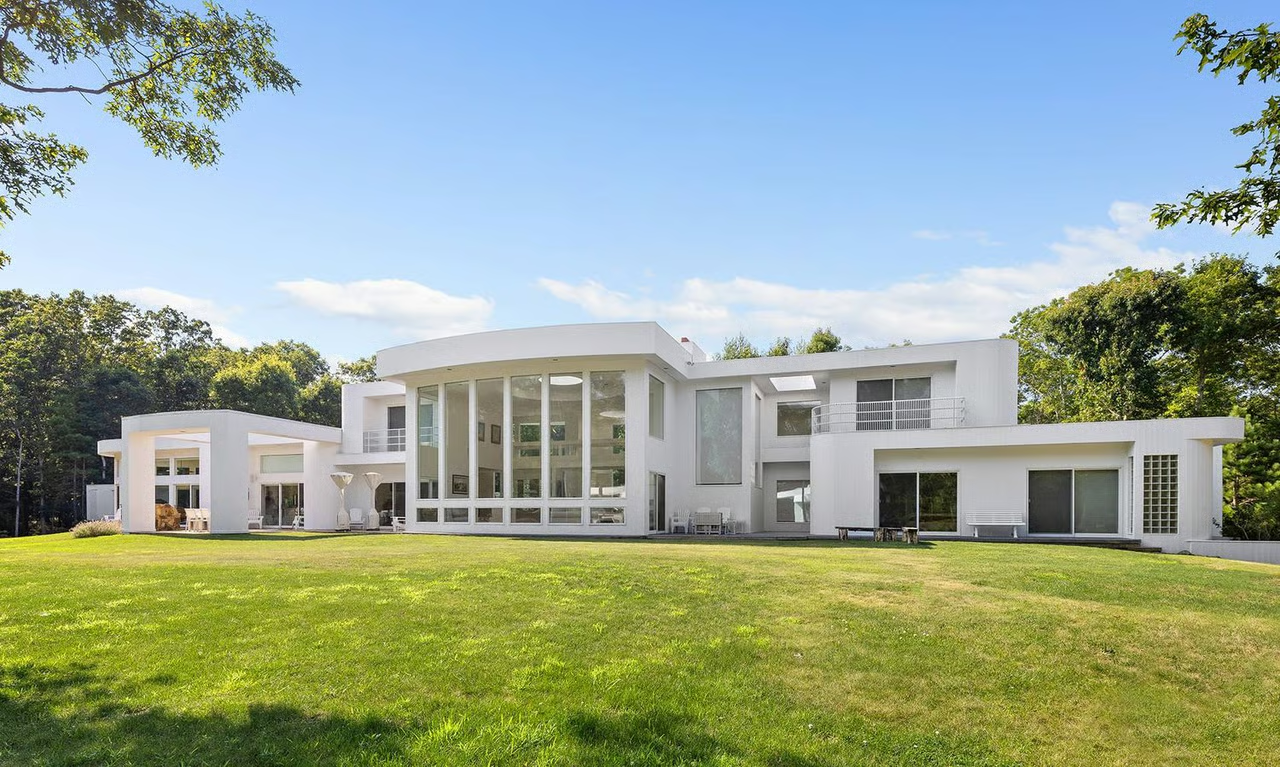
The Watchcase is its own market inside the village and the only building of its kind in the Hamptons, and it is the address the CeeJackTeam knows better than any other. Joseph Fahys, a French emigrant who founded Joseph Fahys and Company in 1857, moved his watchcase plant to Sag Harbor and incorporated the business in 1881 in partnership with his son-in-law Henry Francis Cook. By the end of the century the Fahys Watch Case Company was the largest maker of gold and silver watch cases in the United States and the country's biggest producer of silverware, employing retired seamen alongside Hungarian, Polish, and Italian engravers, and Fahys founded the Jewellers Board of Trade in 1884. Joseph Bulova bought the plant and kept producing watchcases here until 1975, after which the building stood derelict for decades.
Cape Advisors rebuilt it, working with Beyer Blinder Belle, whose restoration credits include Grand Central Terminal and the United States Capitol, alongside Baldassano Architecture and local craftsmen. Over 30,000 original bricks were cleaned and reused, the masonry was re-pointed in historically correct two-color mortar, the signature octagon at Washington and Division Streets was rebuilt to its full five stories, and the water tower was restored as a gazebo with the highest views in the village. The southern half of the site was excavated for a concealed underground garage topped by a landscaped courtyard and the Watchcase Pavilion. Interiors are by Steven Gambrel, an AD100 designer and Sag Harbor Village resident: fumed oak floors, ten to twelve foot ceilings, exposed southern yellow pine beams, and restored brick.
The result is 63 residences in four types, a mix of factory lofts, penthouses, nine townhouses, and eight bungalows, sharing a heated saltwater pool, a fitness pavilion with yoga studio, sauna and spa treatment room, a grand lobby living room with the Vault Bar set into the original factory smokestack, concierge and porters, and designated underground parking and private storage for every residence. It is one block from Main Street and two from the harbor, and it suits buyers who want a village address with no exterior maintenance and a lock-and-leave routine. Recent activity has ranged from roughly $1.6 million for a one-bedroom to $3,885,000 for a townhouse, with a penthouse asking $5.995 million in early 2026.
The CeeJackTeam was the original exclusive sales team for Watchcase. Cee Scott Brown and Jack Pearson launched sales here in 2013, two years before the first residences were ready to occupy, sold 85 percent of the building over the following four years, and returned in 2020 to sell out the remaining residences. The team has handled on-site rentals at Watchcase since 2015 and continues to represent owners here. Nobody has sold more of this building than the people who launched it.
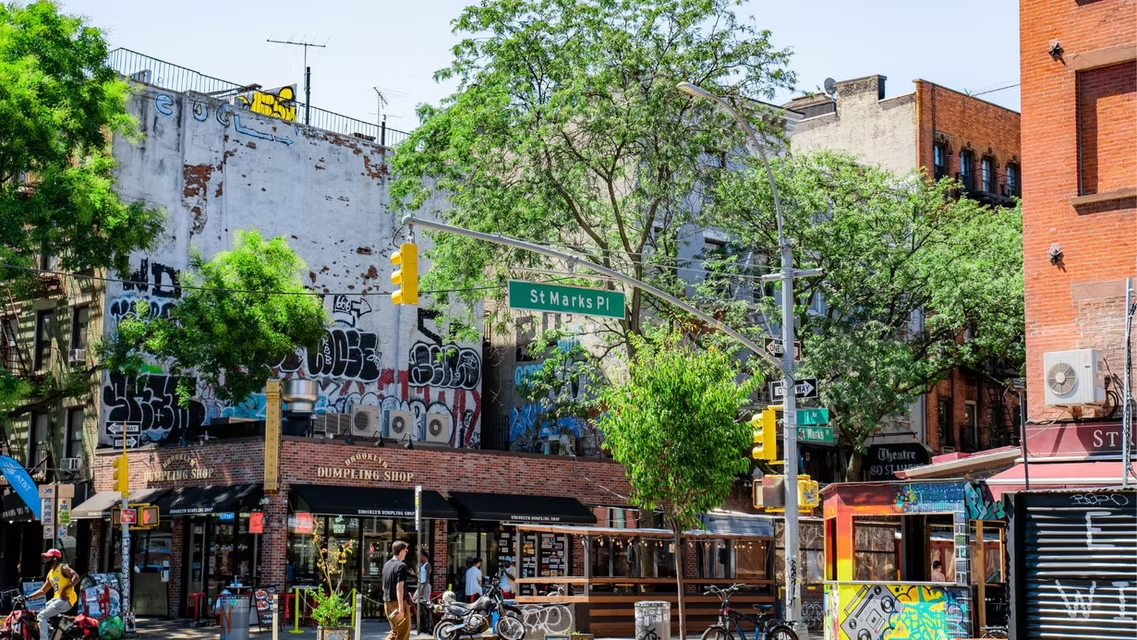
East of the commercial core, the streets running toward Hampton Street and Hempstead Street form the older residential village, and the Eastville area was added to the National Register district in a 1994 boundary increase. The housing here is smaller and more varied than the core: nineteenth-century cottages, modest frame houses, and renovated village homes on compact lots, generally at prices below the Main Street blocks while keeping the same walk into town. For buyers who want a village address, the historic district, and the school district without the core's pricing, this is usually where the search lands. Confirm the historic district boundary by address, because it determines whether exterior work goes through review.
_sig.jpg)
Three adjoining bayfront subdivisions occupy the eastern portion of the village, northeast of Hampton and Hempstead Streets and running down to the eastern end of Havens Beach. Together they cover roughly 154 acres and form a National Register historic district, listed in 2019 as the Sag Harbor Hills, Azurest, and Ninevah Beach Subdivisions Historic District, and known locally as SANS.
The history here is genuinely significant, and it is why the district exists. In 1947 Maude Terry, a Brooklyn schoolteacher who had been vacationing in nearby Eastville, saw the possibility of a beach community on twenty acres of undeveloped woodland between Hampton Street and Gardiners Bay. She negotiated the land from the Gale family and worked with her sister Amaza Lee Meredith, one of the first professional African American women architects in the country, who laid out the lots to give as many households as possible access to the water and designed several of the earliest cottages. Because banks of the period routinely refused mortgages to Black buyers, the founders organized their own financing through the Azurest Syndicate. Sag Harbor Hills, the Sag Harbor Beach Club, and Ninevah Beach followed immediately east between 1949 and 1952, developed by the Sag Harbor Development Company, and more than three hundred families eventually bought land across the three subdivisions. It is one of the last African American beachfront communities left in the United States, which is what the National Register listing recognizes.
The housing reflects that history directly. Most of it is one and two-story wood-frame construction built between the 1940s and the 1970s in ranch, Cape Cod, and mid-century modern styles, set back around thirty-five feet on wooded lots, alongside later construction and substantial renovations. Meredith designed several Azurest houses, the artist Frank Wimberly designed his own home on Hillside Drive East around 1960, and the Terry family cottage is still in the family. Bay frontage and beach association access define the area practically.
One thing every buyer here must check before planning any work: the Village has adopted a Historically Black Beachfront Communities Overlay District covering these three subdivisions, intended to conserve their scale and character. It affects development standards, so confirm with the Village Building Department what it permits before you commit to a plan.
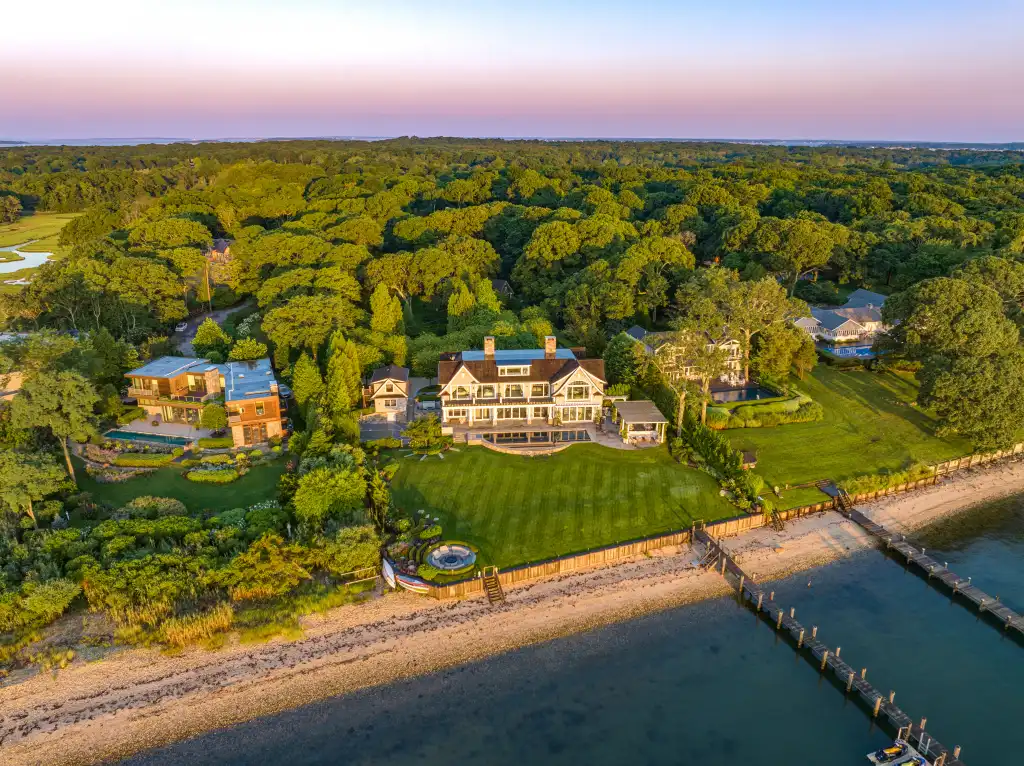
North Haven is a separate incorporated village across the bridge, where Sag Harbor buyers go for acreage and waterfront while keeping the Sag Harbor school district. Noyac, west along Noyac Road in the Town of Southampton, is the most attainable substantial pocket in this market. Bay Point and Redwood are the waterfront peninsulas at the village's edge, Redwood known for its canals and Bay Point reached by a causeway, both trading privacy and dock access for the village walk. All of these are covered on the Sag Harbor page, which also explains how the wider area is reported in market data.
Browse current Sag Harbor Village homes for sale, from historic houses in the walkable core and cottages on the eastern streets to lofts at the Watchcase Factory and bayfront in the village's northeastern subdivisions.
.jpg)
on Main Street, has been the village institution for generations, with a dining room, a famously deep wine list, and a bar that is the closest thing Sag Harbor has to a living room. It operates year-round.
brings a French brasserie sensibility to Main Street that feels both sophisticated and unpretentious. The steak frites and the roasted chicken are staples. The bar is lively without being loud.
serves southern Italian in a space that is part restaurant and part boutique, and it is the reliable choice when you want a table without a scene.
has been the village sushi restaurant for over thirty years, which in Hamptons restaurant terms is close to geological.
is the checked-tablecloth Italian room that has outlasted most of its competition and still fills on a Tuesday in March.
in Sag Harbor Village is one of the most enjoyable shopping stretches on the East End.
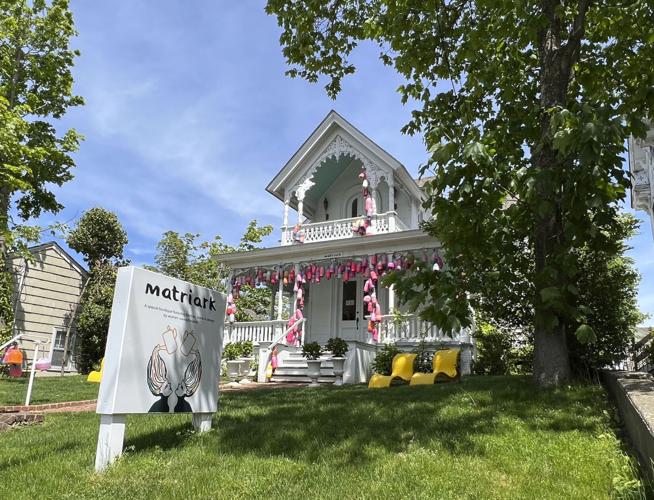
sells exclusively from female-owned brands across clothing, accessories, and beauty.
is a beloved independent bookshop that has been hosting author events since 1980 and remains one of the cultural anchors of the village.
.jpg)
is a residents-only beach at the edge of the village, with calm bay water, a children's playground, and a gazebo that makes it equally suited to a family afternoon and a quiet evening walk.
on Main Street offers tennis and pickleball courts, a playground, baseball diamonds, and open lawn that residents across every age group use throughout the year.
on the waterfront runs Broadway-level productions, comedy, and music from spring through fall. The community shows up for it with the kind of loyalty that keeps it one of the strongest small theaters in New York State.
every September takes over the waterfront with live music, clam chowder competitions, whaleboat racing, and a maritime energy. It captures everything Sag Harbor is about in a single weekend.
on Noyack Road is a 187-acre preserve with trails, bay beach access, and some of the best birding on the East End.
Sag Harbor has its own school district, and unusually for the East End it covers a village that sits in two towns plus parts of the surrounding hamlets. The Sag Harbor Union Free School District, established in 1862 and based at 200 Jermain Avenue, runs two schools serving prekindergarten through grade 12, with roughly 900 students district-wide and a student-to-teacher ratio of about 8 to 1. Its stated service area takes in Sag Harbor, North Haven, Noyac, and part of Sagaponack, so the district line follows neither the village line nor a single town boundary. Verify the district by address.
Sag Harbor Elementary School at 68 Hampton Street serves kindergarten through grade 5, with roughly 380 students, and the district also operates the Sag Harbor Learning Center and a prekindergarten program available to all district residents. The school sits inside the village within walking distance of much of the core, which is part of what makes this village workable for year-round families.
Pierson Middle-High School at 200 Jermain Avenue serves grades 6 through 12 and is the district's only secondary school, enrolling roughly 520 to 535 students. It was established in 1908 and named for Abraham Pierson, an ancestor of the philanthropist Margaret Olivia Slocum Sage, who funded the school building. Pierson offers both Advanced Placement courses and the International Baccalaureate Diploma Programme, and is one of only a handful of schools on Long Island to offer the IB diploma, which is the single most distinctive academic fact about buying into this district. Teams compete as the Whalers.
Independent options are a short drive rather than in the village. The Ross School runs an Upper School on Goodfriend Drive in East Hampton for grades 7 through 12 plus a postgraduate year, with a Lower School on a farmland campus in Bridgehampton, and The Hayground School in Bridgehampton is a small progressive school. For higher education, Stony Brook University maintains its Southampton campus about twenty minutes west, and Suffolk County Community College's Eastern Campus is in Riverhead.
Approximately 2,772 year-round (2020 Census, Incorporated Village of Sag Harbor); summer population is far higher
Settled in the early 1700s; named a United States port of entry in 1789; incorporated as a village on March 26, 1846
An incorporated village lying in two towns, divided at Division Street between the Town of Southampton and the Town of East Hampton. Village taxes and village historic review apply throughout; town taxes and town beach permits depend on which side you are on
11963 (also covers Noyac and North Haven outside the village)
Approximately $2,650,000 on 79 sales inside the village (Suffolk Vision Inc. recorded sales, year-end 2025), up more than 20 percent; the wider Sag Harbor area including Noyac and North Haven was $2,160,759 on 137 sales
Closings inside the village rose 46 percent year over year in 2025, the largest increase of the twelve East End markets tracked, with dollar volume up 86 percent
The business district is listed on the National Register as the Sag Harbor Village District; the Sag Harbor Hills, Azurest, and Ninevah Beach Subdivisions Historic District was listed in 2019 and is also covered by a Village overlay district
Roughly 3.3 miles of shoreline and about 240 acres of village parkland, including Havens Beach, Marine Park, Long Wharf, Otter Pond, and Mashashimuet Park. No ocean beach; the nearest are about fifteen minutes south
Sag Harbor Union Free School District: Sag Harbor Elementary School and Pierson Middle-High School, which offers the International Baccalaureate Diploma Programme
No LIRR station in the village; the nearest are Bridgehampton and East Hampton on the Montauk Branch. Hampton Jitney serves the village, and the Shelter Island ferry runs from North Haven
The median sale price inside Sag Harbor Village was $2,650,000 in 2025 on 79 closings, according to recorded sales data for 2025, up more than 20 percent year over year, with closings up 46 percent and dollar volume up 86 percent. That was the largest increase in closings of any of the twelve East End markets the brokerage tracks. The wider Sag Harbor area, which includes Noyac and North Haven, came in lower at $2,160,759 on 137 closings, so check which geography you are being quoted. Within the village, renovated houses in the historic core have commonly run about $2.5 million to $6 million, the eastern streets and Eastville lower, and Watchcase Factory condominiums from roughly $1.6 million to just under $4 million. For context, East Hampton Village was $5,625,000 and Southampton Village $4,337,500 in the same report.
Sag Harbor Village is the incorporated village of about 1.8 square miles on the bay; Sag Harbor is also used more loosely to mean the village plus the surrounding areas that share its name, mailing address, and school district, chiefly Noyac to the west and North Haven across the bridge, both of which sit outside the village line. The difference is practical. Village property owners pay village taxes, fall under village zoning and the village historic review process for exterior work, and use village parks and Havens Beach under village rules. Outside the village you avoid the village tax and the review process but lose the walk into town. A 11963 mailing address does not tell you which side of the line a house is on, so ask before you make an offer.
Sag Harbor is the only Hamptons village that straddles a town line, divided at Division Street between the Town of Southampton and the Town of East Hampton, with the larger share on the Southampton side. It matters in three practical ways. Your town property tax is set by whichever town your address sits in, your town beach permit comes from that town and is not valid at the other town's beaches, and some town-level services and regulations differ. Village government, village taxes, and the village historic review process apply to the whole village regardless of which town you are in. Ask which town a specific address falls in before you make an offer, because you cannot tell by looking.
The Watchcase is a condominium community at 15 Church Street, one block off Main Street, built inside the former Fahys and Bulova watchcase factory, which produced watchcases until 1975 and was later rebuilt into 63 residences including factory lofts, a townhouse, and garden and bungalow units. Amenities include a heated saltwater pool, a gym, a yoga studio, a spa treatment room, a sauna, concierge and on-site management, underground parking, and a private residents' garden. It is the only building of its kind in the Hamptons and it suits buyers who want a walkable village address with no exterior maintenance. Recent activity has ranged from roughly $1.6 million for a one-bedroom to $3,885,000 for a townhouse, with a penthouse asking $5.995 million in early 2026. Inventory is often a single unit or none. The CeeJackTeam has sold inside the building since it was completed.
The village has its own district, the Sag Harbor Union Free School District, which runs two schools for prekindergarten through grade 12 with roughly 900 students and a student-to-teacher ratio of about 8 to 1. Sag Harbor Elementary School on Hampton Street covers kindergarten through grade 5, and Pierson Middle-High School on Jermain Avenue covers grades 6 through 12. Pierson offers both Advanced Placement and the International Baccalaureate Diploma Programme and is one of only a handful of Long Island schools to offer the IB diploma, which is the most distinctive academic feature of buying here. The district's service area covers Sag Harbor, North Haven, Noyac, and part of Sagaponack, so it follows neither the village line nor a single town boundary. Verify the district for a specific address.
No. This is a bay village, not an ocean one, and it is the main trade-off against East Hampton Village or Southampton Village. Havens Beach is the village bay beach, and Marine Park and Long Wharf sit at the foot of Main Street. Bay water is calmer and warmer, which suits families and boating, but for Atlantic surf you drive roughly fifteen minutes south to the ocean beaches in Bridgehampton or East Hampton. What the village gives you instead is a working harbor, marinas, roughly 3.3 miles of shoreline, about 240 acres of parkland, and the Shelter Island ferry a few minutes north in North Haven. For most buyers who choose this village, the walk into town outweighs the drive to the ocean.
This is the CeeJackTeam's home village. The office is at 84 Main Street, a block from the harbor, which means the team works this market daily rather than driving in for showings. Cee Scott Brown and Jack Pearson, with Partner Agent Denise Wilder, bring over 60 years of combined experience and over $1.5 billion in sales volume, have been named Top Producer 13 years in a row, and have held a place on the Top Producer Presidents Council for 10 of those years. Since joining Compass in 2020 the team has closed 425+ deals from Westhampton to Montauk. The team has also sold condominiums inside the Watchcase Factory since the building was completed and has been the broker on the building's available inventory, which makes it the practical first call on that address. Cee came out of two decades in the New York art world and Jack out of luxury fashion retail, directly useful in a village of protected historic houses and a serious arts calendar. The team also works from the Compass offices in Bridgehampton, East Hampton, and Southampton, so it is present right across the East End rather than only here.

Our office is at 84 Main Street, a block from the harbor, so if you want to see this village properly, start with a walk rather than a website. The CeeJackTeam has worked the East End since 2006, across the historic core, the Watchcase Factory, the eastern streets, and the bayfront subdivisions. For buyers, we will tell you which town your address falls in, what the historic review process actually involves, what the overlay district permits if you are looking northeast of Hampton Street, and what is coming available before it is listed. For sellers, we will price your house against village closings rather than a regional median that understates it. Call 516-457-7111 or email ceejackteam@compass.com to talk it through.